
french toast recipe success usually comes down to two unsexy details, bread choice and how long you let it soak, get those right and “fluffy” stops being a guess.
If you’ve ever ended up with slices that look golden but feel wet in the middle, or toast that tastes like plain eggs, you’re not alone, most kitchen mishaps here are technique, not talent.
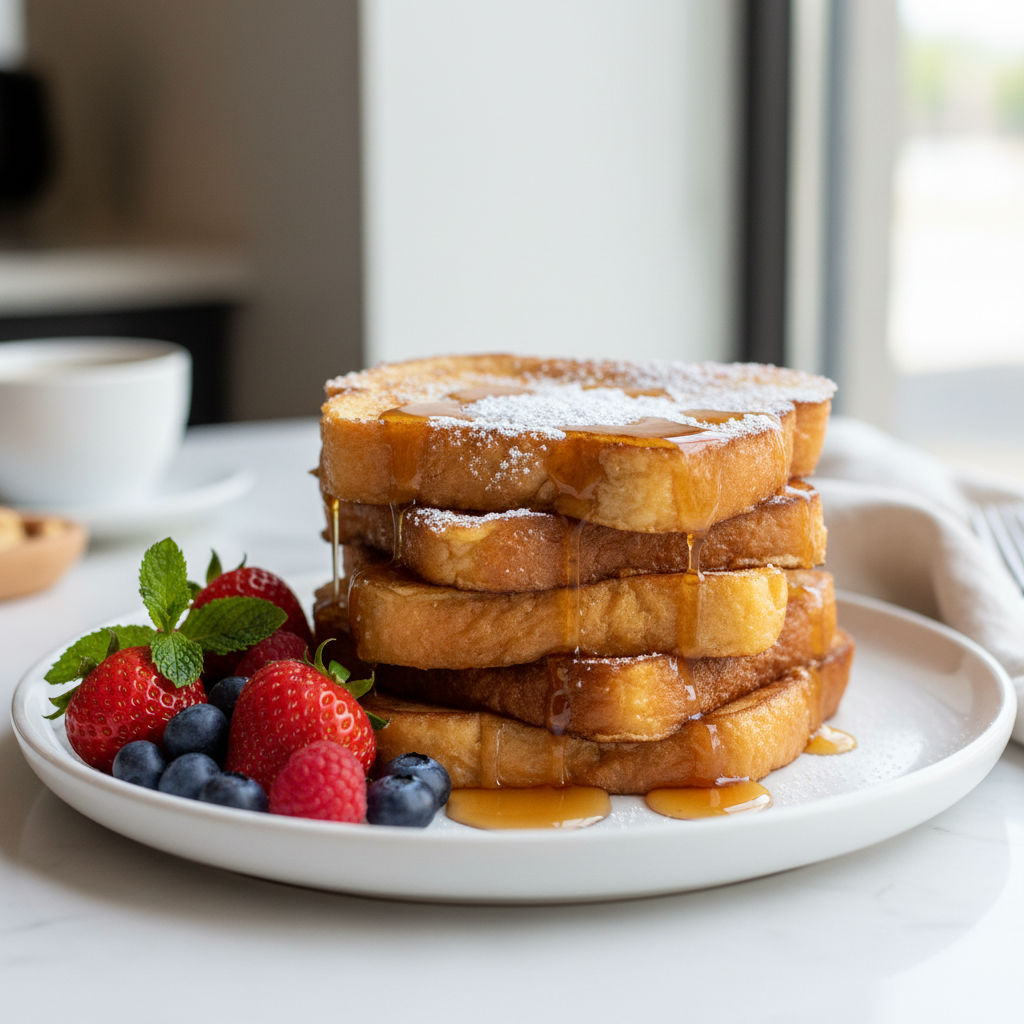
This guide focuses on a classic, American-style French toast that’s tender inside, lightly crisp outside, and easy to repeat on a sleepy weekend morning, plus a few practical fixes if your first batch goes sideways.
What makes French toast fluffy (and what usually ruins it)
Fluffiness isn’t magic, it’s moisture management plus heat control, you want enough custard absorbed to soften the crumb, but not so much that the center turns custardy in a bad way.
- Thicker, slightly dry bread absorbs custard evenly without collapsing.
- A balanced custard gives structure, eggs set, dairy keeps it tender.
- Medium heat and patience cooks through without scorching the outside.
Most “soggy” French toast happens when bread is too fresh, slices are too thin, the pan runs too hot, or the soak time is long enough to flood the center.
Ingredients for a classic fluffy French toast recipe
You don’t need a long list, you need the right ratios, this version is built for 4 thick slices.
Base ingredients
- 4 slices thick-cut brioche, challah, or Texas toast (about 3/4 to 1 inch)
- 2 large eggs
- 1/2 cup whole milk (or 1/4 cup milk + 1/4 cup half-and-half)
- 1 tbsp sugar (optional, helps browning)
- 1 tsp vanilla extract
- 1 tsp ground cinnamon
- 1/8 tsp salt
- 1–2 tbsp butter for the skillet
Optional, but genuinely helpful
- 1–2 tsp orange zest for a brighter “brunch” feel
- A small pinch of nutmeg for warmth
- 1 tsp cornstarch whisked in for slightly sturdier custard (useful with very rich bread)
According to USDA Food Safety and Inspection Service (USDA FSIS), egg-based mixtures should be cooked thoroughly and leftovers refrigerated promptly, if you’re cooking for kids, pregnant people, or anyone immunocompromised, it’s worth being extra conservative with doneness.
Quick ratio table (so you can scale it without thinking)
If you cook for a crowd, the easiest way to keep the texture consistent is scaling the custard with a simple ratio.
| Servings | Bread slices | Eggs | Milk/half-and-half | Vanilla | Cinnamon |
|---|---|---|---|---|---|
| 2 | 4 thick slices | 2 | 1/2 cup | 1 tsp | 1 tsp |
| 4 | 8 thick slices | 4 | 1 cup | 2 tsp | 2 tsp |
| 6 | 12 thick slices | 6 | 1 1/2 cups | 1 tbsp | 1 tbsp |
Key point: If you go much lighter on eggs, slices can taste like sweet milk bread, if you go much heavier, the center can set like scrambled eggs, especially with thin slices.
Step-by-step method (reliable, not fussy)
This is the part that turns an average french toast recipe into one you can repeat without measuring your panic.
1) Dry the bread just a little
If your bread is very fresh, lay slices out 10–15 minutes, or toast them lightly, you’re not “cooking” it, you’re just reducing surface moisture so the custard absorbs evenly.
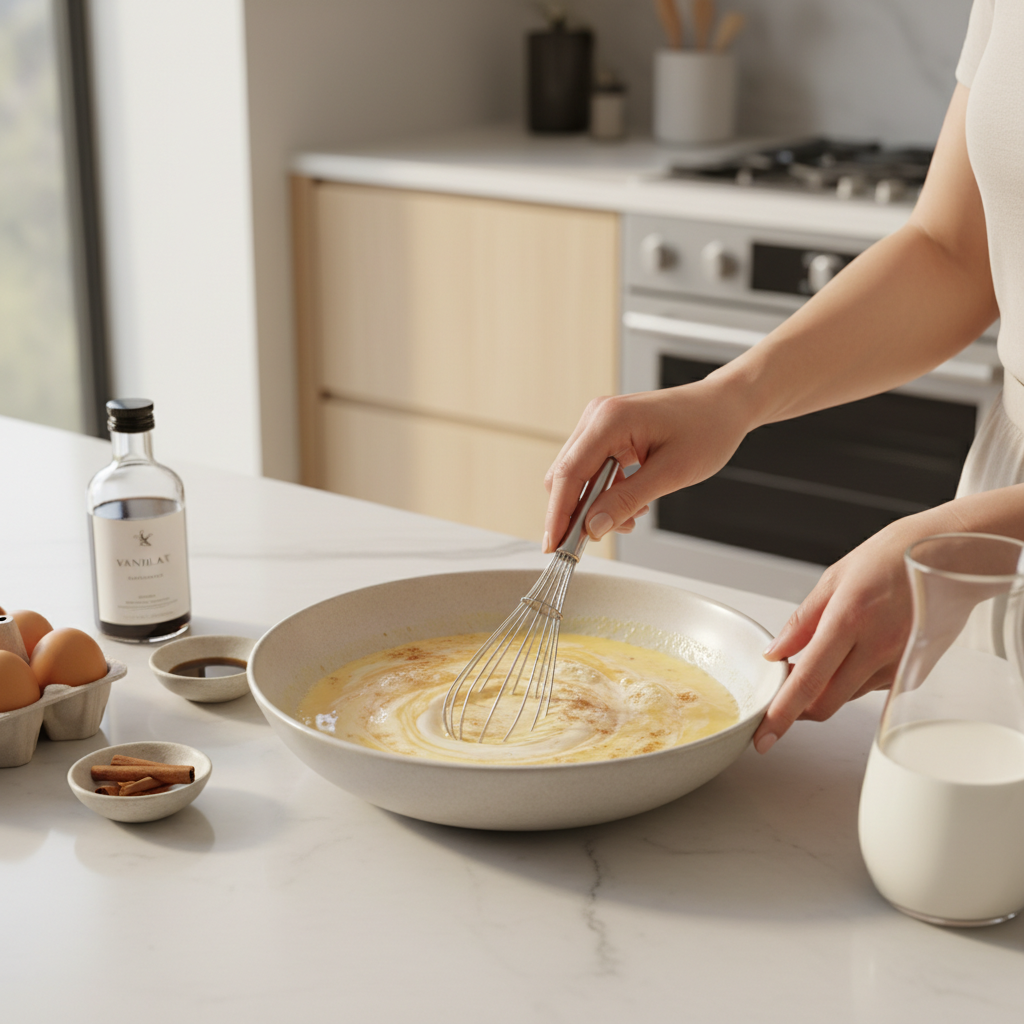
2) Mix the custard until smooth
Whisk eggs, milk, sugar, vanilla, cinnamon, and salt in a wide shallow dish, keep whisking until you don’t see streaky egg white, that’s where “egg bits” can come from.
3) Soak with a timer mindset
Dip each slice 15–25 seconds per side for brioche or challah, 25–35 seconds per side for drier Texas toast, you want the surface saturated, but the slice should still hold its shape when lifted.
4) Cook low-and-steady
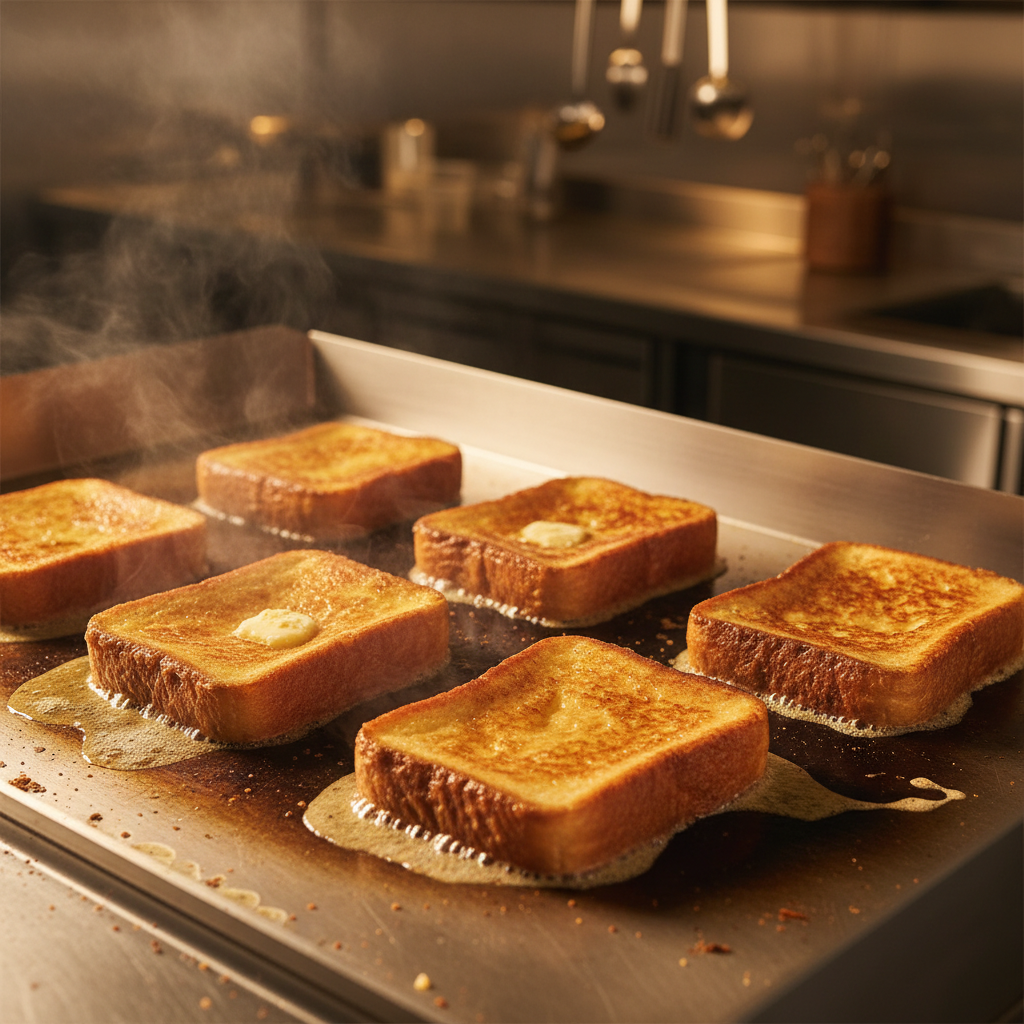
Heat a skillet or griddle on medium to medium-low, melt butter and let the foam calm down, then cook 2–4 minutes per side, adjust heat if the butter browns too fast.
5) Keep early batches warm the right way
If you’re making several slices, hold them on a wire rack in a 200°F oven, stacking traps steam and softens the crisp edges.
Self-check: why yours turns soggy, bland, or burnt
If your results aren’t where you want them, this quick checklist usually pins the issue in under a minute.
- Soggy center: bread too thin, soak too long, or heat too high so the outside browns before inside sets.
- Eggy flavor: custard not whisked smooth, pan too cool so eggs set slowly, or ratio too egg-heavy for your bread.
- Bland taste: no salt, weak vanilla, cinnamon clumps, or you skipped browning (color equals flavor).
- Burnt outside: heat too high, butter scorching, or sugar-heavy custard on a hot pan.
- Falling apart: very fresh bread, thin slices, or over-soaking.
Reality check: the same custard behaves differently on different breads, so don’t be shy about adjusting soak time after the first slice.
Practical upgrades (without turning it into dessert)
A classic base is great, but small tweaks can make your french toast recipe feel “restaurant” without extra work.
Texture upgrades
- Use a wire rack after cooking, it preserves crisp edges.
- Finish with 1 minute per side on slightly higher heat if you want more browning, do it only after the center is set.
Flavor upgrades
- Brown butter carefully, then wipe the pan and add fresh butter for cooking, you get aroma without burning.
- Add citrus zest to the custard, it makes maple syrup taste brighter.
- Swap cinnamon for pumpkin spice when you want a seasonal twist.
Topping ideas that don’t overwhelm
- Warm maple syrup + a pinch of flaky salt
- Greek yogurt + berries for a tangy balance
- Powdered sugar + lemon squeeze for a lighter finish
Common mistakes (the kind people repeat for years)
A few habits feel logical in the moment, but they’re exactly what makes French toast disappointing.
- Pressing the bread into the custard, it forces too much liquid into the center.
- Cooking on high heat “to go faster”, it usually creates a dark crust with a wet middle.
- Using only egg and no dairy, it sets tighter and can taste more sulfur-y, dairy mellows it.
- Skipping salt, sweet breakfast still needs a little seasoning to taste like itself.
- Overcrowding the pan, temperature drops, slices steam instead of sear.
Make-ahead, storage, and food safety notes
You can prep custard ahead, but keep it chilled and treat it like any raw-egg mixture.
- Make-ahead custard: whisk and refrigerate up to 24 hours, re-whisk before dipping.
- Leftovers: refrigerate within 2 hours, reheat on a skillet or toaster oven to bring back texture.
- Freezing: freeze cooked slices in a single layer, then bag them, reheat from frozen in the oven for best texture.
According to U.S. Food and Drug Administration (FDA), keeping perishable foods out at room temperature for extended periods can increase food safety risk, when in doubt, refrigerate sooner, especially in warm kitchens.
Conclusion: your next batch should be predictably fluffy
A fluffy, classic result usually comes from using thicker bread, a smooth custard, a controlled soak, and steady heat, once you lock those in, you can customize flavors without losing texture.
If you want one simple action today, switch to thicker slices and lower your heat a notch, your french toast recipe will taste more “brunch” and less “rushed.”
FAQ
What bread works best for a fluffy French toast recipe?
Brioche and challah are popular because they’re soft but structured, Texas toast works well when you want something sturdy and less sweet, very airy sandwich bread tends to collapse and soak unevenly.
How do I keep French toast from getting soggy?
Use slightly dry bread, soak briefly, and cook on medium to medium-low so the center has time to set, also rest finished slices on a wire rack, a plate makes steam and softens the crust.
Can I make French toast without milk?
Yes, many people use unsweetened non-dairy milks, texture can vary by brand, if yours seems thin, consider adding a spoon of creamier option like oat milk, or reduce soak time to avoid a wet middle.
Why does my French toast taste eggy?
Usually it’s under-mixed custard or too low heat, whisk until fully smooth and cook long enough to set the center, adding vanilla and a pinch of salt also helps the flavor read “custard” rather than “eggs.”
Should I soak French toast for a long time?
Not usually, longer soaking can work for very thick, dry bread, but most home slices do better with a short soak, if you want more custard flavor, increase cinnamon or vanilla instead of soak time.
Can I bake French toast instead of pan-frying?
You can, but it turns into a different texture, more like a soft casserole, if you still want crisp edges, pan-cooking or finishing briefly in the oven on a rack tends to get closer to the classic diner feel.
What’s the best pan for French toast?
A nonstick skillet makes browning easier for beginners, cast iron gives great color but requires more heat control, whichever you use, preheat properly and avoid overcrowding.
If you’re cooking brunch for family and want a more “set-it-and-enjoy-coffee” routine, build your own house french toast recipe card from the ratio table above, then keep one variable at a time when you tweak bread, soak time, or heat.