
The best blueberry muffins recipe moist usually comes down to three things home bakers overlook: gentle mixing, the right fat-and-dairy combo, and a bake setup that sets the dome fast without drying the crumb.
If you have ever pulled muffins from the oven that look great, then feel a little tough or dry by afternoon, you are not alone. Muffins are quick bread, which means small technique mistakes show up immediately, and blueberries add extra variables like water content and “purple streak” batter.
This guide keeps it practical, you will get a reliable base recipe, options for frozen vs fresh berries, a troubleshooting checklist, and a few small upgrades that make muffins taste more like a bakery tray without needing specialty gear.
What “moist” actually means for blueberry muffins
Moist muffins are not “wet” or underbaked, they feel tender, springy, and rich, with a crumb that stays soft after cooling. In many kitchens, dryness comes from overmixing, overbaking, or using a batter that does not hold moisture well.
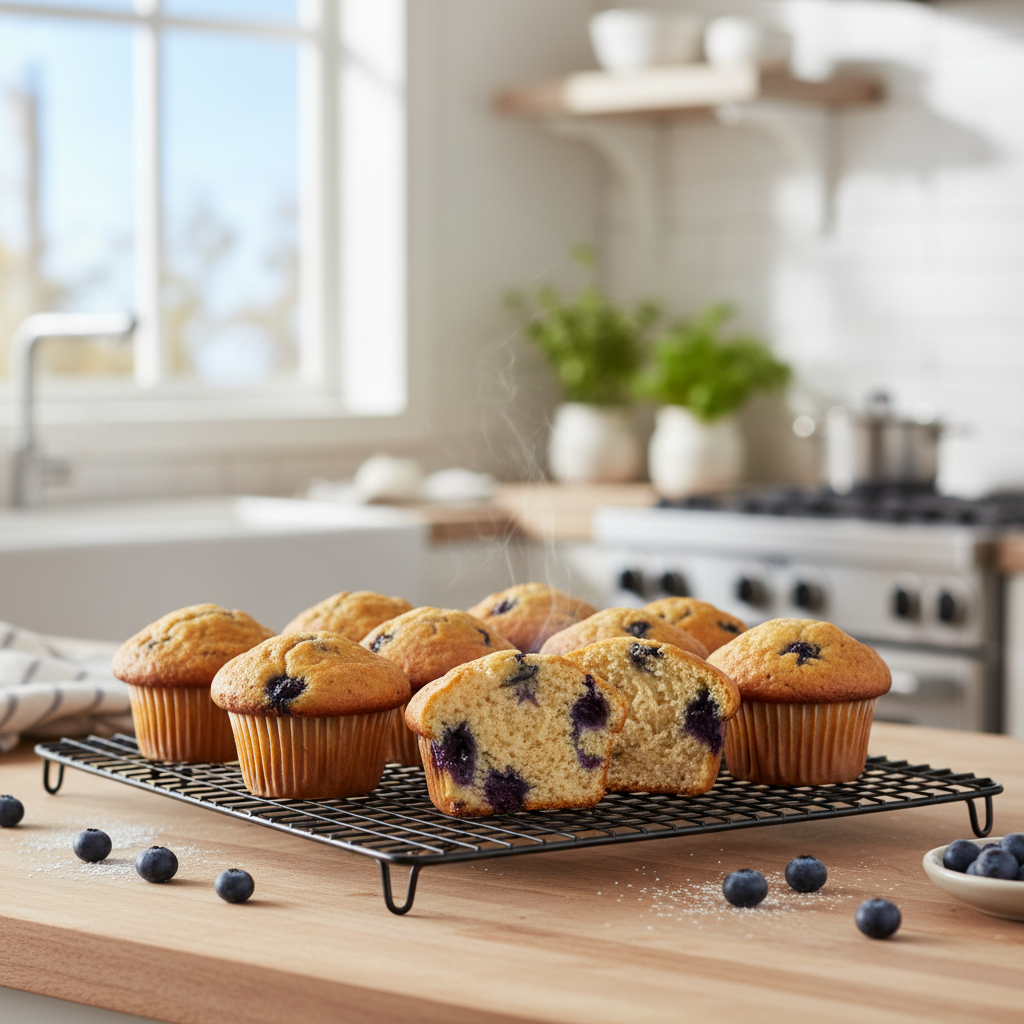
Also worth saying, “moist” is partly about timing. Muffins often taste best after 20–40 minutes of cooling, when steam redistributes, but they can also dry out quickly if they sit uncovered in a warm kitchen.
Best Moist Blueberry Muffins Recipe (2026-friendly, no weird ingredients)
This recipe aims for a soft interior, crisp top, and big blueberry pockets. It uses oil plus a little butter for flavor, and yogurt (or sour cream) for tenderness.
Ingredients (makes 12 standard muffins)
- All-purpose flour: 2 cups (260g)
- Baking powder: 2 tsp
- Baking soda: 1/4 tsp
- Fine salt: 1/2 tsp
- Granulated sugar: 3/4 cup (150g)
- Large eggs: 2, room temp if possible
- Neutral oil (canola/avocado): 1/2 cup (120ml)
- Melted butter (cooled slightly): 2 tbsp
- Greek yogurt or sour cream: 3/4 cup (180g)
- Milk: 1/3 cup (80ml), plus 1–2 tbsp if batter feels too thick
- Vanilla extract: 2 tsp
- Blueberries: 1 1/2 cups (fresh or frozen)
- Optional topping: 2–3 tbsp coarse sugar, or a quick streusel
Directions
- Heat oven to 425°F. Line a 12-cup muffin pan with paper liners, or lightly grease.
- Whisk flour, baking powder, baking soda, and salt in a bowl.
- In a second bowl, whisk sugar and eggs until glossy, about 30 seconds, then whisk in oil, melted butter, yogurt, milk, and vanilla.
- Add dry ingredients to wet, fold with a spatula until just combined. A few small flour streaks are fine.
- Toss blueberries with 1 tsp flour, fold in gently.
- Scoop batter into cups, filling nearly to the top. Add coarse sugar if using.
- Bake 6 minutes at 425°F, then reduce to 350°F and bake 12–16 minutes more, until a toothpick comes out clean or with a few moist crumbs.
- Cool 5 minutes in pan, then move muffins to a rack.
Key point: That hot-start temperature helps the muffin tops rise quickly, which often improves texture without extra bake time.
Why this stays moist (the real reasons, not hype)
People search for the best blueberry muffins recipe moist because they want softness that lasts past breakfast. This version holds up because of a few boring but powerful details.
- Oil + a little butter: Oil stays liquid at room temperature, which helps tenderness, while butter adds flavor without making the crumb dry.
- Yogurt or sour cream: Adds fat and acidity, supporting a softer crumb. According to USDA food safety guidance, dairy-based batters should be cooled and stored properly to reduce risk of spoilage.
- Gentle gluten control: Muffins need some structure, but aggressive mixing can turn them bready.
- Two-stage baking: A quick blast of heat helps lift, then lower heat finishes the center without over-browning the edges.

If your past muffins dried out fast, the culprit is often bake time more than ingredients. Muffins can go from perfect to dry in a small window, especially in darker pans or convection ovens.
Quick self-check: why your muffins keep turning dry
Use this checklist before you change everything. Usually one or two fixes move you much closer to the “bakery” result.
- You mix until smooth: For muffins, smooth batter is a trap, stop earlier.
- You measure flour by scooping: This often packs extra flour, use spoon-and-level or a scale.
- You bake “just to be safe”: That extra 3–5 minutes costs moisture.
- You use only butter: Flavor is great, but many butter-only muffins firm up after cooling.
- Your blueberries are frozen and wet: This can force longer baking, which dries the crumb.
Moisture levers: swaps and upgrades (choose what fits your pantry)
Once you have a dependable base, you can customize without guessing.
Fresh vs frozen blueberries
- Fresh: Fold in directly, rinse only if needed, then dry well.
- Frozen: Do not thaw. Toss with 1–2 tsp flour, fold quickly, bake right away to reduce bleeding.
Dairy options
- Greek yogurt: Thick, reliable, tends to keep muffins tender longer.
- Sour cream: Richer feel, slightly denser crumb in a good way.
- Buttermilk: Lighter texture, may need 2–3 extra minutes bake time depending on your oven.
Moisture-friendly add-ins (don’t overdo it)
- Lemon zest for brightness without drying the batter
- Brown sugar, swap 1/4 cup of the white sugar for a softer bite
- Streusel for a bakery top, but keep it light so centers bake through
Bake times, pan choices, and the doneness cues that matter
Ovens vary enough that a “perfect” time online may miss your kitchen by several minutes. Watch cues, not the clock.
| What you see | What it usually means | What to do |
|---|---|---|
| Tops brown fast, centers lag | Heat too high or pan too dark | Drop temp 15–25°F next batch, check earlier |
| Flat muffins | Old leavener or overmixed batter | Replace baking powder, fold less |
| Dry edges, okay center | Overbaked or thin batter | Shorten bake 2–4 minutes, add 1 tbsp milk if needed |
| Gummy streaks | Underbaked or too much fruit moisture | Bake 2–3 minutes longer, use smaller berries or less |
Doneness cue I trust: the muffin top springs back when lightly pressed, and a toothpick comes out with a few moist crumbs, not wet batter.
Practical tips for storing (and keeping them soft)
The best blueberry muffins recipe moist still needs decent storage, because muffins lose moisture fast when exposed to air.
- Same day: Cool fully, store in a container with a paper towel under and over the muffins, lid slightly cracked for the first hour if they are still warm.
- 2–3 days: Airtight container at room temperature, avoid the fridge unless your home is very warm. Refrigeration can make baked goods feel stale faster.
- Freeze: Wrap individually, freeze up to about 2 months for best quality, thaw at room temp, then warm 10–15 seconds in the microwave if you like.
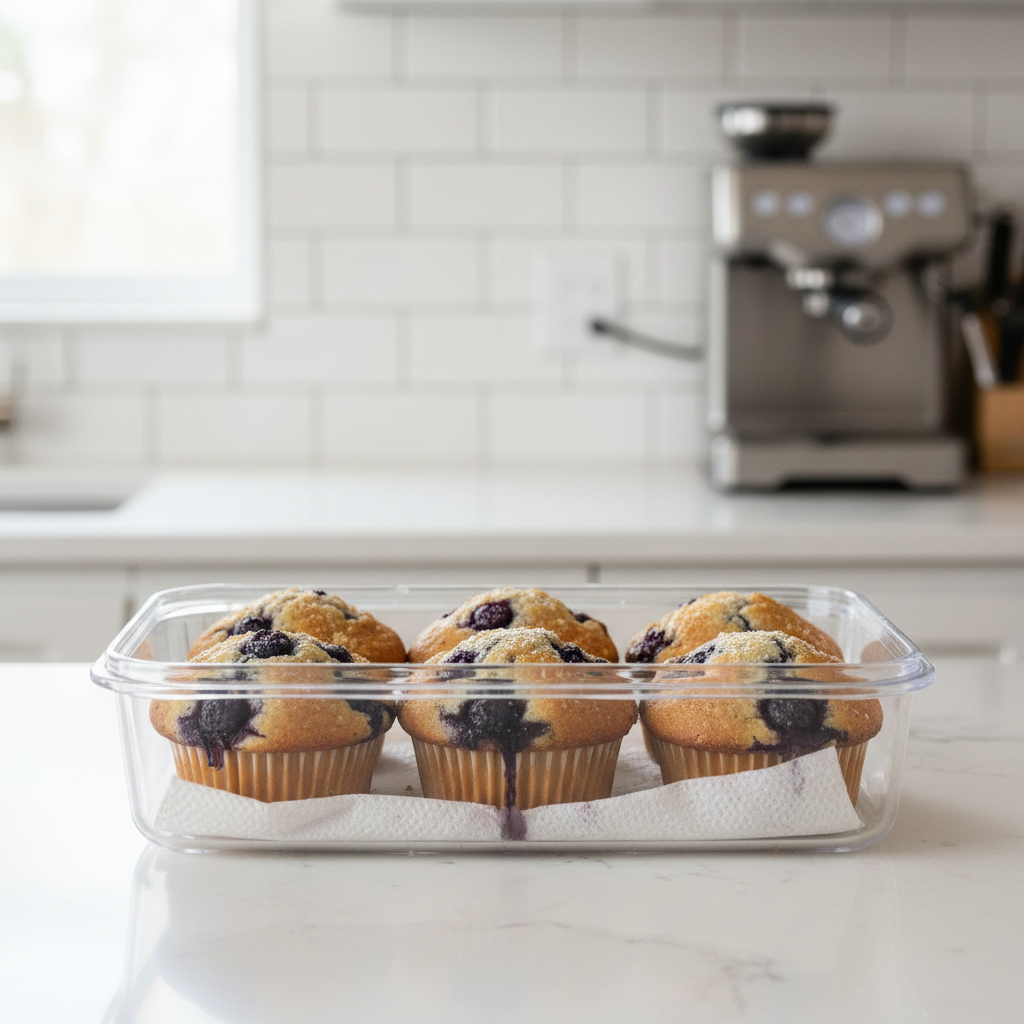
Food safety matters too. According to FDA guidance on food storage, perishable foods should not sit at room temperature for extended periods. Muffins are generally low-risk baked goods, but if you add cream cheese fillings or similar, consider refrigeration and shorter holding time, and when in doubt, ask a qualified food safety professional.
Common mistakes (and what to do instead)
- Overfilling the oven with two pans: Airflow drops, bake becomes uneven. If you must bake two pans, rotate and allow extra time.
- Overmixing after berries: Blueberries break, batter turns gray-purple, crumb tightens. Fold like you mean it, but stop early.
- Skipping the cool-down: Cutting in immediately lets steam escape, which can read as “dry.” Give them at least 15–20 minutes.
- Using jumbo liners without adjusting time: Bigger muffins need longer bake, which risks dryness. Consider lowering temp slightly after the hot start and extend gently.
Key takeaways and a simple next step
If you want the best blueberry muffins recipe moist in your own kitchen, focus less on “secret ingredients” and more on the few controllable moments: measure flour carefully, fold lightly, and pull muffins when the crumb is set but still tender.
Next step: bake one batch exactly as written, then keep notes on two things only, bake time in your oven and how thick your batter feels. That tiny feedback loop is what makes the recipe truly yours.