
Marinara sauce easy usually means one thing on a weeknight: you want real tomato flavor without babysitting a pot for hours, and you want it to taste better than a plain jar.
This canned-tomato version hits that sweet spot, it cooks in about 20–30 minutes, uses pantry staples, and still gives you the little “restaurant” cues: a glossy finish, mellow garlic, and enough simmer time to round off the raw edge.
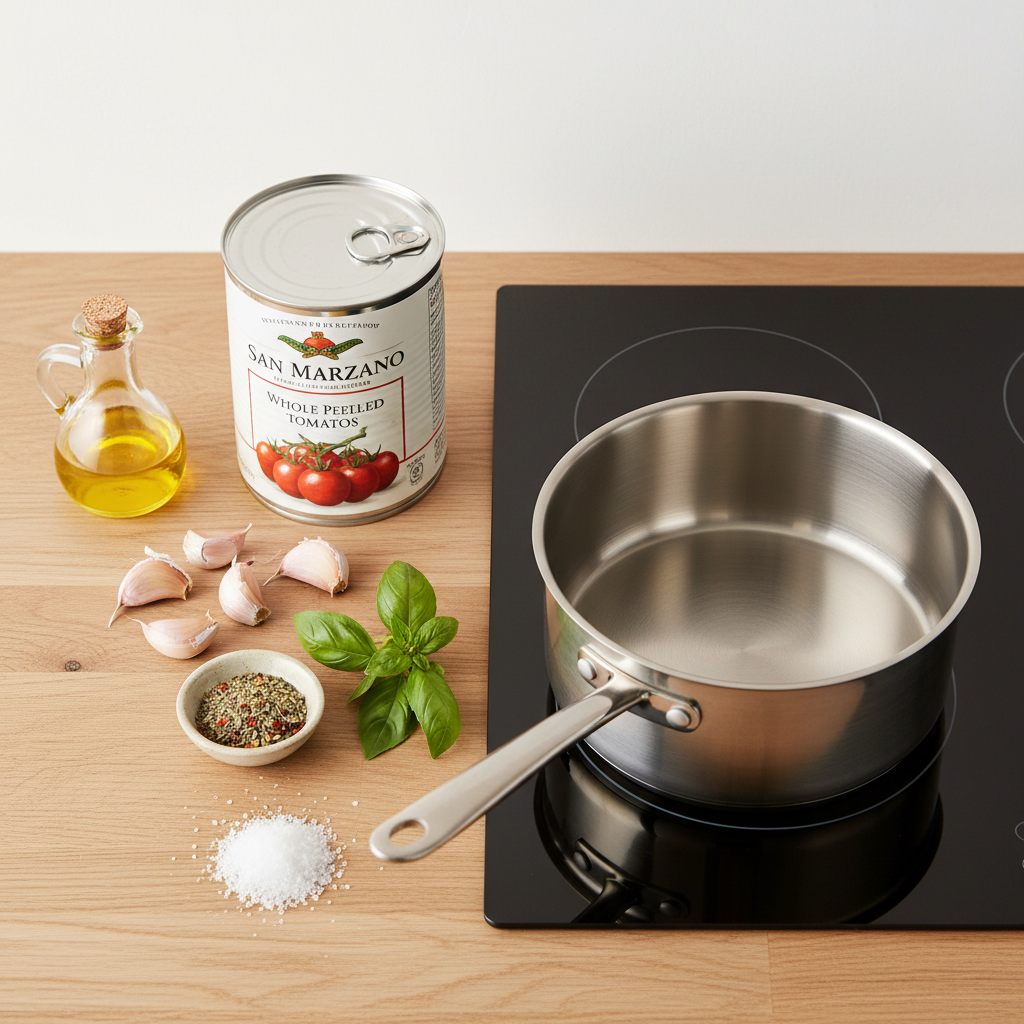
People often assume great marinara requires fresh tomatoes or a long Sunday simmer. In reality, quality canned tomatoes are packed at peak ripeness, so the baseline flavor is already strong, you just need the right order of steps and a few guardrails for acidity and texture.
Below you’ll get a reliable base recipe, quick ways to adjust it for pasta, pizza, or meatballs, and a simple troubleshooting list for the most common “why does mine taste off” moments.
What makes canned marinara work (and where it can go wrong)
Canned tomatoes are consistent, which is why this approach feels almost unfairly easy. But a few small choices can make the sauce taste flat, sharp, or watery.
- You need a fat base: olive oil carries aroma compounds from garlic and herbs, without it the sauce tastes thinner.
- Garlic timing matters: browned garlic turns bitter fast, especially in a small pan on high heat.
- Acidity varies by brand: some cans run bright and tangy, others taste sweeter; your “one pinch of sugar” may be unnecessary.
- Water content differs: crushed tomatoes, whole peeled, and “tomato sauce” all behave differently in simmer time.
According to the USDA, canned foods can be part of a balanced diet when handled and stored properly, which is reassuring if you lean on pantry meals often. Still, always discard cans that are bulging, leaking, or badly dented.
Quick self-check: pick your best canned tomato starting point
If you’ve ever followed a recipe and still ended up with marinara that feels wrong, this is usually why. Use this table to choose your can and adjust simmer time.
| Tomato product | Best for | Texture result | Simmer guidance |
|---|---|---|---|
| Whole peeled tomatoes | Most balanced “from scratch” vibe | Silky but fresh, you control chunkiness | 20–35 min, crush by hand for better body |
| Crushed tomatoes | Fastest pasta sauce | Even, medium thickness | 15–25 min, watch splatter |
| Diced tomatoes | Chunky rustic sauces | More separate pieces, less cohesion | 25–40 min, may stay “soupy” |
| Tomato sauce (plain) | Quick pantry meal, kid-friendly | Smooth, sometimes a bit “canned” tasting | 10–20 min, boost with garlic and herbs |
The core marinara sauce easy recipe (from cans)
This base is intentionally simple, because you can push it toward pizza sauce, vodka-style richness, or a spicy arrabbiata later. The amounts are forgiving, but the order is not.
Ingredients (makes about 4 cups)
- 2 tbsp extra-virgin olive oil
- 4–6 garlic cloves, thinly sliced or minced
- 1/4 tsp red pepper flakes (optional)
- 1 can (28 oz) whole peeled tomatoes or crushed tomatoes
- 1 tsp dried oregano (or 1 tbsp fresh)
- 1/2 tsp kosher salt, then adjust
- Black pepper to taste
- 1 small handful fresh basil, torn (or 1/2 tsp dried basil)
- Optional: 1 tsp sugar or 1 small grated carrot (only if needed)
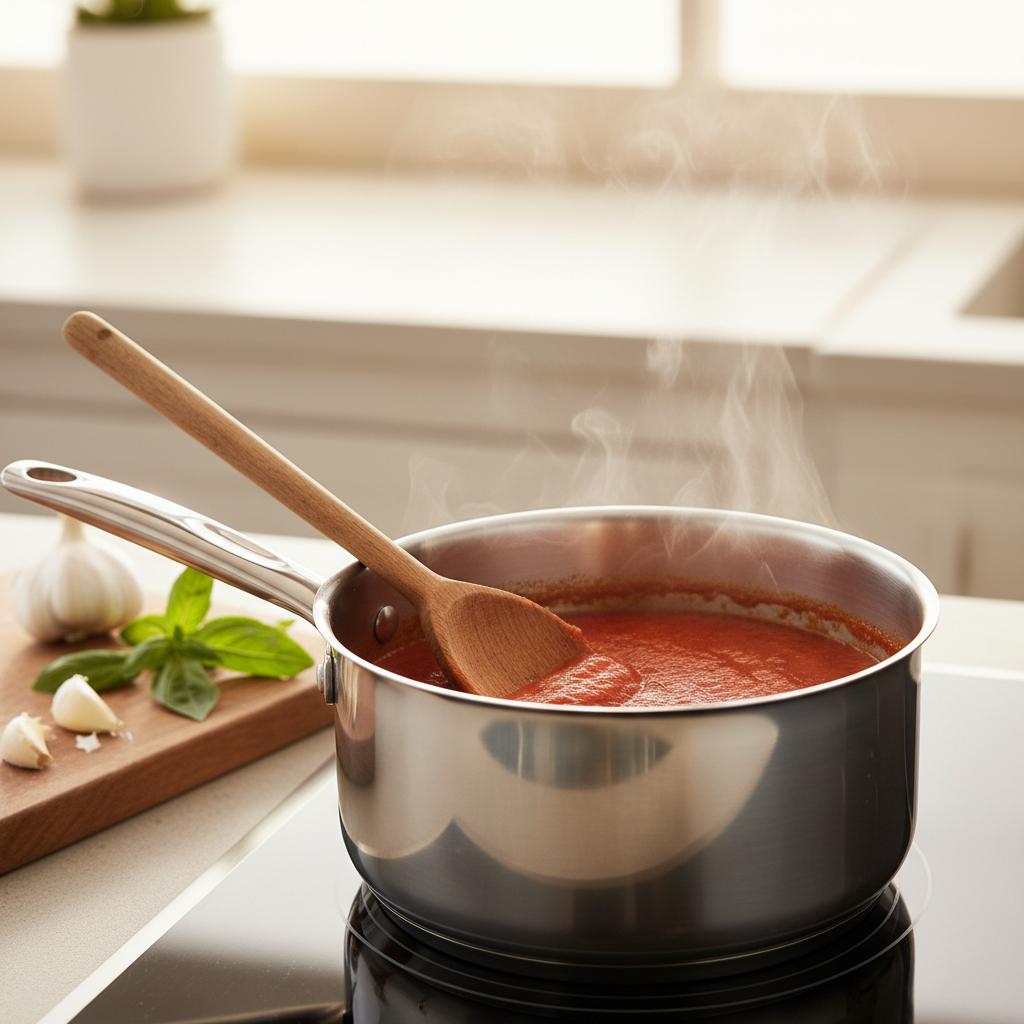
Method (20–30 minutes, mostly hands-off)
- Warm the oil in a saucepan over medium heat, then add garlic and cook until fragrant, 30–60 seconds. Keep it pale, no browning.
- Add red pepper flakes (if using) and oregano, stir for 10 seconds so the oil picks up the aroma.
- Add tomatoes. If using whole peeled, crush them in the pan with a spoon or your clean hand before the pot gets hot, fewer big splashes later.
- Season with salt and pepper, bring to a gentle simmer.
- Simmer uncovered 15–25 minutes, stirring occasionally, until the sauce looks slightly darker and coats a spoon.
- Turn off heat, stir in basil. Taste, then decide if it needs a tiny pinch of sugar or another pinch of salt.
Key points (the stuff that actually changes the outcome)
- Gentle simmer beats hard boil, a rolling boil can taste harsh and reduce too fast on the edges.
- Salt in two steps: a little early for structure, then final adjustment after reduction.
- Basil at the end: it stays bright instead of turning dull and “cooked.”
Make it taste like “your” sauce: 6 practical variations
Once you have the base, you can customize without turning it into a complicated project. These are the changes that tend to read clearly on the plate.
- For pizza: simmer 5–10 minutes longer for a thicker spread, skip basil, add a pinch more oregano.
- For meatballs: add 1–2 tbsp tomato paste with the garlic, it deepens flavor and helps the sauce cling.
- For a smoother sauce: blend briefly with an immersion blender, then simmer 5 minutes to settle.
- For spicy arrabbiata vibes: increase red pepper flakes, finish with parsley instead of basil.
- For richer “Sunday” energy: stir in a knob of butter off heat, it softens acidity without making it sweet.
- For extra veggie balance: sauté finely diced onion before garlic, keep the heat moderate so it turns translucent, not brown.
Troubleshooting: fix watery, acidic, bitter, or bland marinara fast
This is where most people get frustrated, because they keep adding things at random. Try the smallest correction first, then taste again.
- Watery sauce: simmer uncovered longer, or add 1–2 tbsp tomato paste. Avoid adding flour or cornstarch, it can dull flavor.
- Too acidic or sharp: add a small pinch of sugar, or a small knob of butter off heat. If you need more than a teaspoon of sugar, the can might just be extra tangy.
- Bitter taste: usually browned garlic or scorched herbs. Start over if it’s strongly bitter, but if it’s mild, add a little more tomato and a touch of fat.
- Flat and boring: add salt first, then a tiny splash of vinegar is rarely needed, but a bit more oregano or a fresh basil finish often wakes it up.
- Too sweet: add a pinch of salt and a bit of crushed red pepper, sweetness often feels less obvious with heat and savoriness.
Real-world practical tips: storage, freezing, and scaling up
This is the part that makes marinara feel like a habit, not a one-off recipe.
- Fridge: cool quickly, store in a sealed container, use within a few days. If anything smells “off,” don’t debate it, toss it.
- Freezer: freeze in 1–2 cup portions for weeknight portions, leave headspace for expansion.
- Double batch: use a wider pot to reduce evenly, then season at the end so it doesn’t drift too salty.
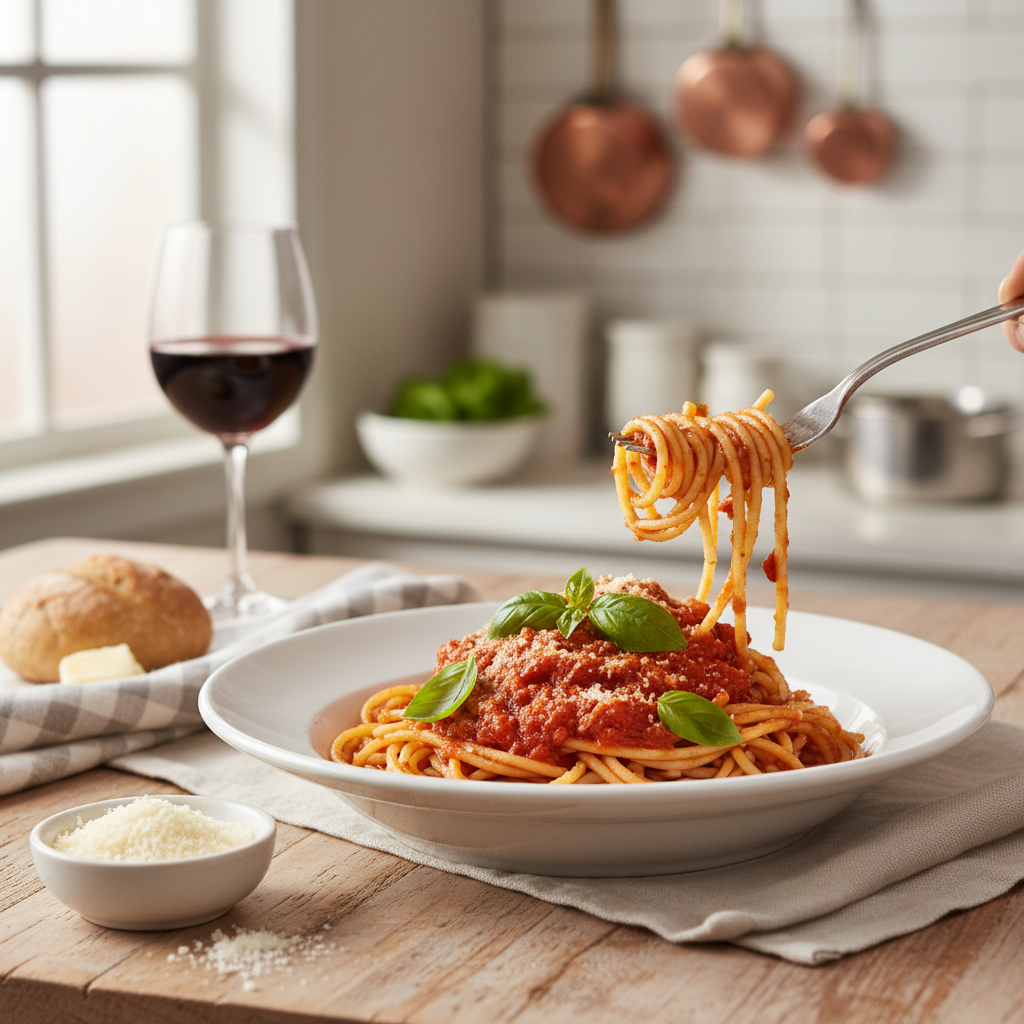
- Pasta finish: simmer the sauce with a splash of starchy pasta water, then toss with noodles for 1 minute, it clings better than ladling on top.
Conclusion: a dependable pantry sauce you can improve over time
If you want marinara sauce easy nights without settling for something that tastes generic, the “cans + correct order + short simmer” formula is usually enough. Pick decent tomatoes, keep the garlic gentle, simmer until it coats a spoon, then adjust salt and acidity with a light touch.
Your next move: cook one batch as written, then note what you wished it had more of, thicker body, more heat, more herb, and make just one change next time. That’s how a simple sauce becomes your house sauce.
FAQ
Can I make marinara sauce easy without fresh herbs?
Yes. Dried oregano does most of the heavy lifting. If you don’t have basil, leave it out and finish with a little extra black pepper and olive oil for aroma.
Is whole peeled better than crushed for canned marinara?
Whole peeled often tastes a bit fresher and gives you control over texture, but crushed is more convenient and very consistent. If you keep both, whole peeled is the more flexible “one can to rule them all.”
How do I thicken marinara without making it taste pasty?
Uncovered simmering is the cleanest way. If you need faster results, a spoonful of tomato paste adds body and depth without a starchy aftertaste.
Why does my sauce taste metallic from the can?
It can happen with certain brands or if the sauce is under-simmered. A short simmer, enough olive oil, and finishing with basil usually helps. If the taste is strong, try a different brand next time.
Do I need sugar in canned tomato sauce?
Not always. Many canned tomatoes taste balanced once they simmer and get enough salt. If it still tastes sharp, add sugar in tiny pinches, you’re aiming for balance, not sweetness.
Can I use this as pizza sauce right away?
You can, but it’s often better after a slightly longer reduction so it doesn’t water down the crust. Also consider skipping basil and leaning on oregano and garlic.
Is it safe to leave marinara simmering unattended?
It’s safer to stay nearby. Tomato sauce can splatter and scorch, and heat levels vary by stove. Keep it at a gentle simmer and stir occasionally.
Quick, low-stress next step
If you’re trying to get dinner on the table without juggling five pots, keep a “marinara kit” in your pantry: a couple cans of tomatoes, garlic, oregano, and good olive oil. The next time you need marinara sauce easy, you’re 30 minutes from a sauce that tastes like you meant to make it.