
Vegetable lasagna can be the most comforting “eat your veggies” dinner, until it turns watery, refuses to set, or tastes like a pan of nice intentions. The good news is it’s usually not your recipe, it’s the moisture and the cheese strategy.
This guide focuses on the practical stuff that makes a cheesy veggie lasagna sliceable and craveable: which vegetables behave, which cheeses melt best, how to layer so it doesn’t collapse, and how to prep ahead without losing texture.
And yes, we’ll talk about substitutions, because real life means using what’s in the fridge, not what a recipe page imagined.
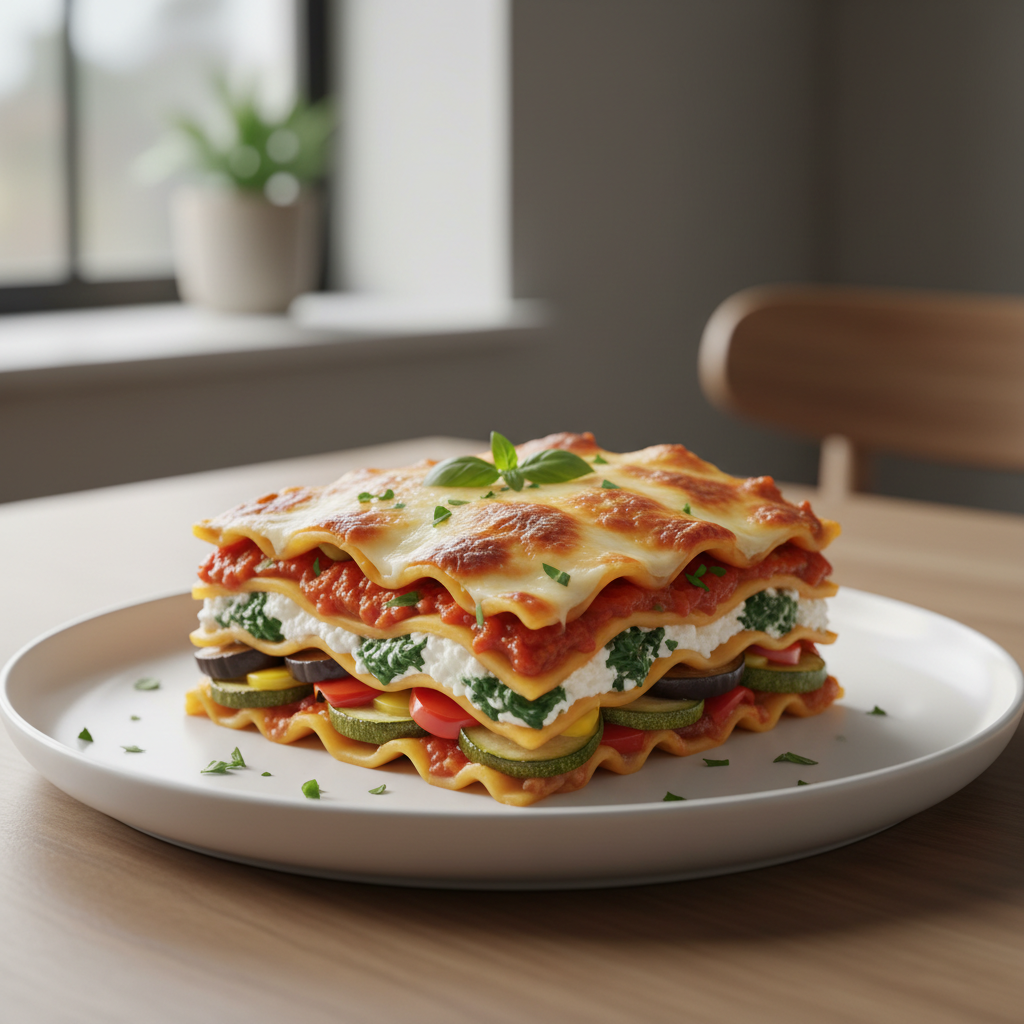
Why vegetable lasagna gets watery (and how cheese fits in)
Most “soupy” outcomes come from a simple mismatch: vegetables release water as they cook, but the structure of the lasagna depends on moisture being absorbed and held in place by pasta, sauce thickness, and the cheese layer.
- High-water vegetables (zucchini, mushrooms, spinach) dump liquid fast, especially if they go in raw.
- Sauce that’s too thin adds more free water, and veggies don’t help.
- Ricotta used alone can turn loose if it’s very wet or not stabilized with egg and seasoning.
- Not resting after baking keeps everything in “lava mode,” so slices slide apart.
Cheese is more than flavor here. Ricotta (or cottage cheese) creates body, mozzarella provides stretch, Parmesan adds salty depth, and a little egg helps the filling set so your layers stay put.
Cheese choices: what to use, what to avoid, and easy swaps
If you want classic American-Italian comfort, you’re usually aiming for a three-cheese approach. It’s flexible, but each cheese has a job.
| Cheese | What it does in lasagna | Best pick | Good swap |
|---|---|---|---|
| Ricotta | Creates creamy, stable layers | Whole-milk ricotta | Small-curd cottage cheese (drain first) |
| Mozzarella | Melt + stretch + top browning | Low-moisture shredded | Provolone or part-skim mozzarella |
| Parmesan | Salty depth, helps drying/browning | Freshly grated Parmigiano-Reggiano | Pecorino Romano (use a bit less) |
One small but important call: fresh mozzarella tastes great, but it often brings extra water. If you love it, use it sparingly and pair with low-moisture mozzarella so the top doesn’t weep.
According to USDA FoodData Central, cheeses vary a lot in moisture and sodium, which is a quiet reason two “similar” lasagnas can bake very differently.
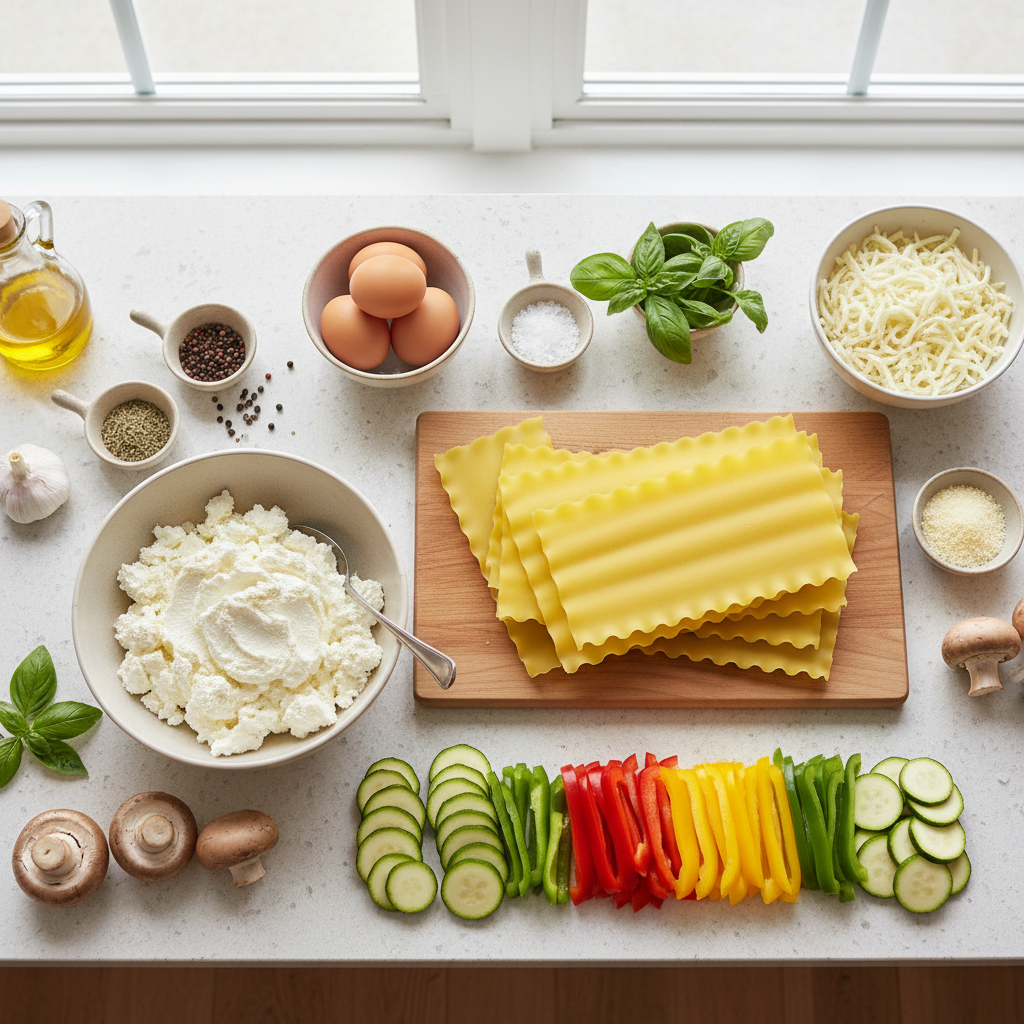
Ingredients that consistently work (plus veggie prep that matters)
You can build a vegetable lasagna with almost any vegetable, but some combinations are friendlier if you want clean slices.
Reliable veggie lineup
- Roasted zucchini or yellow squash (slice, salt briefly, roast to dry out)
- Bell peppers (roast or sauté until soft)
- Onion + garlic (base flavor, don’t skip)
- Mushrooms (cook hard until their pan moisture evaporates)
- Spinach (thaw and squeeze very dry if frozen)
Moisture control checklist
- Salt sliced zucchini/eggplant 10–20 minutes, blot, then roast or pan-cook.
- Cook mushrooms until the pan goes from “wet” to “dry sizzle.”
- If using spinach, squeeze it like you mean it, then chop so it distributes evenly.
- Keep sauce on the thicker side; a watery marinara makes everything harder.
If you’re using no-boil noodles, moisture control matters even more because the noodles need liquid to soften, but not so much that the pan turns into soup. It’s a narrow lane, but manageable.
Step-by-step: a sliceable cheesy vegetable lasagna
This is a dependable template rather than a precious, one-true recipe. Adjust vegetables based on what you have, keep the structure.
1) Make a thicker sauce
- Sauté onion and garlic in olive oil.
- Add marinara and simmer 10–15 minutes to reduce slightly.
- Season with salt, black pepper, and a pinch of oregano or Italian seasoning.
2) Cook and dry your vegetables
- Roast or sauté your main vegetables until tender and not glossy-wet.
- Let them cool a few minutes so they stop steaming into your layers.
3) Mix the ricotta layer (this is where structure happens)
- Ricotta + 1 egg + grated Parmesan + chopped parsley or basil.
- Add salt and pepper; taste matters because veggies are mild.
- If ricotta looks loose, stir in a bit more Parmesan.
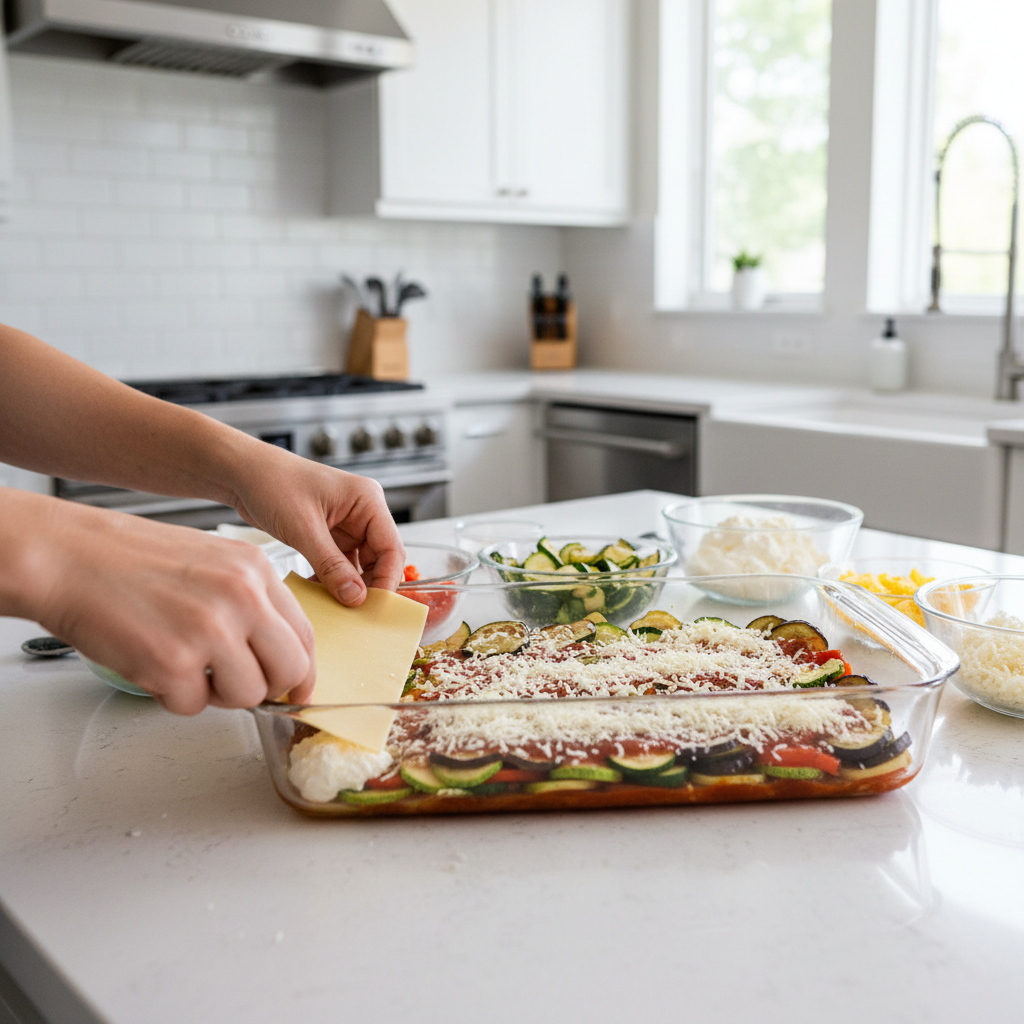
4) Layer with intention
- Thin sauce on the bottom (prevents sticking).
- Noodles.
- Ricotta mixture.
- Vegetables.
- Mozzarella.
- Repeat 2–3 times, finish with sauce + mozzarella + Parmesan.
Key point: don’t stack wet vegetables right next to the noodles without a barrier. The ricotta layer acts like insulation between “wet” and “starch.”
5) Bake, then rest (non-negotiable if you want neat slices)
- Cover with foil, bake around 375°F until bubbling at the edges.
- Uncover near the end to brown the top.
- Rest 20–30 minutes before cutting.
Food safety note: If you include egg in the cheese mixture, bake until the center is hot and steaming; if you’re unsure, it’s smart to follow standard casserole safe-handling guidance. According to USDA Food Safety and Inspection Service, leftovers should be refrigerated promptly after serving and reheated thoroughly.
Make-ahead, freezer, and weeknight shortcuts
Vegetable lasagna is one of those dishes that often tastes better the next day, but the prep can feel like a project. Here are the shortcuts that don’t wreck texture.
- Make the vegetables and sauce up to 2 days ahead, store separately so nothing gets soggy.
- Assemble the night before, but go a touch lighter on sauce if your vegetables are juicy.
- Freeze unbaked if you can, since the noodles and veggies keep better structure when baked fresh.
- Weeknight move: use a sheet-pan roasted veggie mix, then build the lasagna while it cools.
If you’re freezing baked portions, expect a slightly softer texture after thawing. It’s still very good, just less “restaurant slice.”
Common mistakes (and what to do instead)
- Mistake: Using raw zucchini and mushrooms. Do instead: cook them until moisture is gone, then cool briefly.
- Mistake: Relying on fresh mozzarella for the whole top. Do instead: mostly low-moisture mozzarella, fresh only as an accent.
- Mistake: Cutting right out of the oven. Do instead: rest, then cut with a sharp knife and a firm spatula.
- Mistake: Under-seasoning the ricotta. Do instead: salt, pepper, herbs, and Parmesan so the filling tastes like something.
One more that surprises people: adding “extra vegetables” without adjusting layer thickness. If the pan gets too tall and crowded, it bakes unevenly and the middle can stay loose.
Practical serving tips and flavor upgrades
Once the structure is right, flavor is the fun part. A vegetable lasagna benefits from a few sharp, bright notes that keep it from tasting heavy.
- Add lemon zest to the ricotta mixture for lift.
- Use fresh basil between layers if you have it.
- Finish with a peppery green salad (arugula works) to balance richness.
- Try a smoky element like roasted poblano or a pinch of smoked paprika in the sauce.
If you’re watching sodium or fat intake, changes are possible, but results vary by brand and ratios. In many cases, it helps to keep Parmesan but use a bit less mozzarella, rather than stripping all the flavor and trying to “fix” it with extra salt later.
Key takeaways
- Dry-cook watery vegetables before layering, especially zucchini, mushrooms, and spinach.
- Stabilize ricotta with egg and Parmesan so slices hold.
- Choose low-moisture mozzarella for reliable melt and less pooling.
- Rest the pan after baking so layers set and cut clean.
Conclusion: a cheesy veggie lasagna that behaves
A great vegetable lasagna is less about complicated technique and more about a few calm decisions: cook off moisture, build layers with purpose, and let the whole thing settle before you rush it to the table. If you try just one change next time, make it the veggie prep, it fixes most of the frustration.
If you want an easy next step, pick two vegetables, roast them until slightly browned, use a thicker sauce, then follow the same cheese-and-layer template. Your future self, holding an actual slice, will appreciate it.
FAQ
How do I keep vegetable lasagna from being watery?
Cook moisture out of vegetables before layering, keep sauce slightly thick, and rest the lasagna after baking. Those three together usually solve it.
Is cottage cheese okay instead of ricotta?
Yes, many cooks use it. Drain it first and consider blending briefly if you want a smoother texture, then season it well so it doesn’t taste flat.
Should I use no-boil noodles or regular lasagna noodles?
No-boil noodles save time but are less forgiving with moisture. Regular noodles give you more control, especially if your vegetables are juicy.
What vegetables are best for a classic vegetable lasagna?
Roasted zucchini, peppers, onions, mushrooms, and well-drained spinach are common because they taste good and can be managed for moisture.
Can I make vegetable lasagna ahead for a party?
Usually yes. Assemble the day before, refrigerate, and bake when you’re ready. If it looks wet before baking, hold back a little sauce on the top layer.
How long should lasagna rest before slicing?
About 20–30 minutes is a practical window for cleaner slices. If you cut earlier, it can still taste great, it just won’t hold a sharp edge.
What’s the best cheese blend for a cheesy top?
Low-moisture mozzarella for melt, Parmesan for flavor, and optional provolone for extra richness. Fresh mozzarella can work, but it often adds moisture.
If you’re trying to streamline weeknight cooking, consider prepping the roasted vegetables and ricotta mix in advance, then assembling the vegetable lasagna the next day when you have 15 minutes and a little patience for the bake.