
lamb chops pan fried can taste restaurant-level at home, but most people get tripped up by two things, uneven doneness and a weak crust that slips into “gray and steamy.”
This recipe leans hard into garlic, keeps the pan hot enough for browning, and uses a simple timing approach so you stop guessing. You’ll also get a quick checklist for choosing chops, a doneness guide, and a few fixes for the common “why is this tough” moments.
One note before we jump in, lamb varies a lot by cut and thickness, so treat times as a starting point, then trust temperature and feel. According to USDA, using a food thermometer is the most reliable way to confirm doneness and safety.
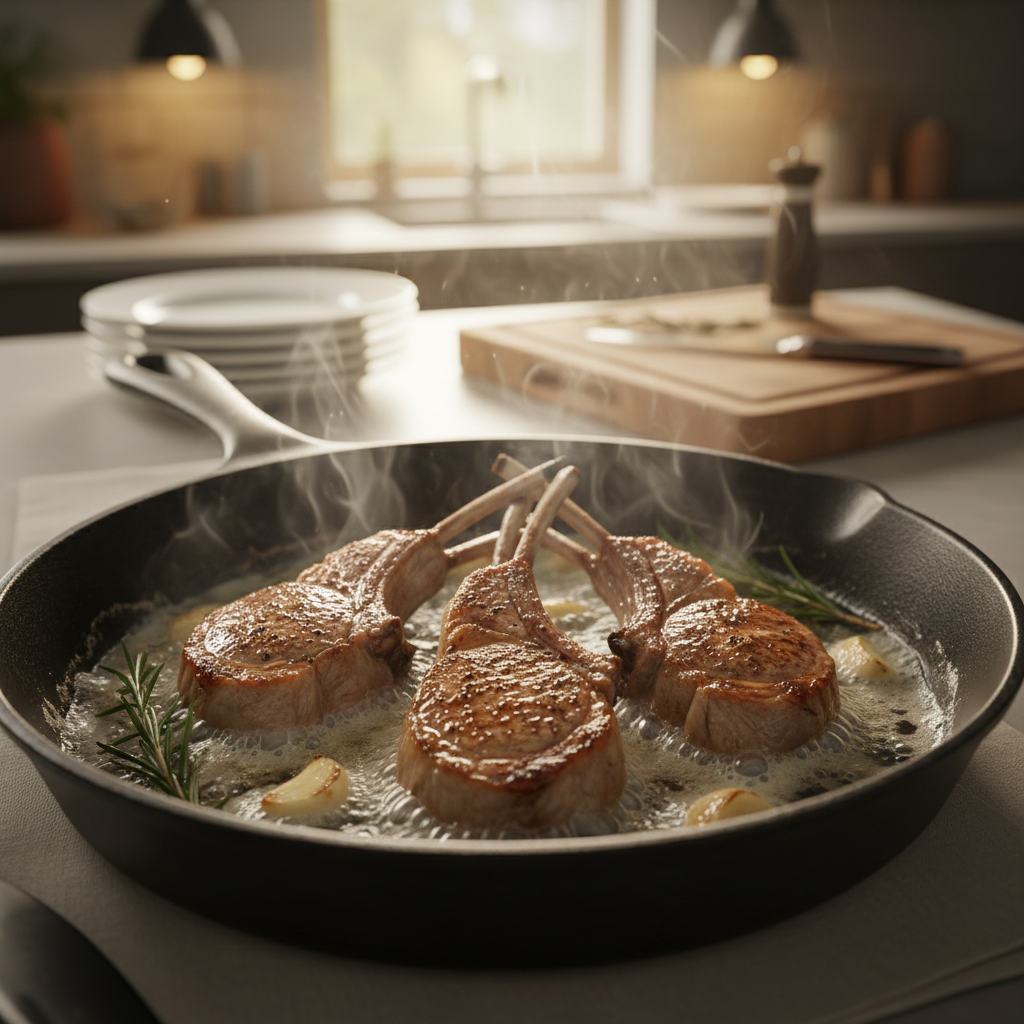
What makes pan-fried lamb chops go wrong (and how to avoid it)
If your chops come out chewy, it’s usually not because “lamb is tough,” it’s because the cooking setup worked against you.
- Pan not hot enough: you get pale meat, then you keep cooking to “add color,” and the center dries out.
- Chops too wet: moisture blocks browning, especially with marinades that include lemon or lots of garlic paste.
- Skipping rest time: juices run out, the bite feels drier than it should.
- Wrong chop for quick sear: very thick loin chops can work, but need a gentler finish than thin rib chops.
- Garlic burns: burnt garlic tastes bitter fast, so timing matters.
Quick self-check: which lamb chops are you cooking?
Before you season anything, get clear on what’s in front of you, it changes the timing more than most people expect.
- Rib chops (the “lollipops”): tender, usually thinner, best for fast high-heat searing.
- Loin chops: meatier, often thicker, can over-brown outside before center hits your target temp.
- Shoulder chops: more connective tissue, often better for braising than quick pan-fry.
Thickness matters even more than the label. If yours are under 1 inch, think “quick sear.” If they’re closer to 1.25–1.5 inches, plan for a short stovetop finish on lower heat or a quick oven finish.
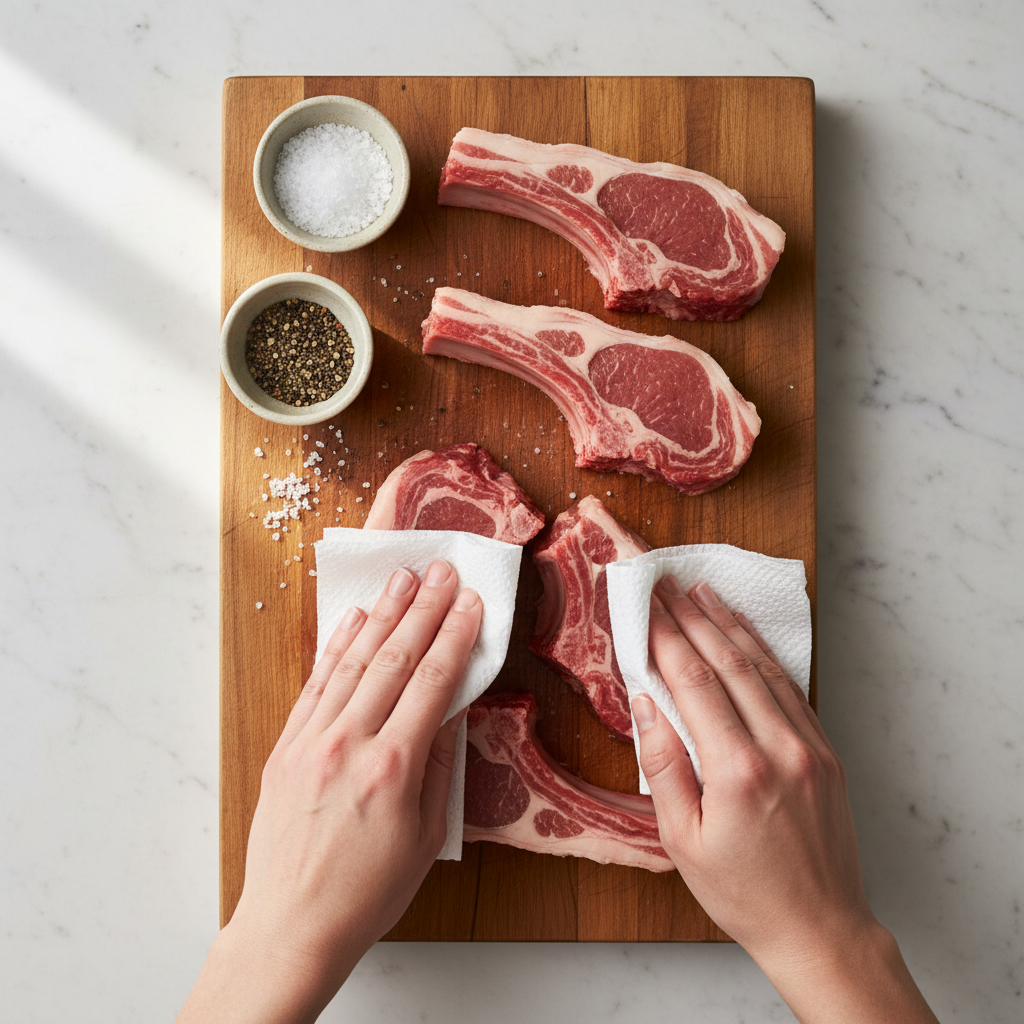
Ingredients and gear (keep it simple, but intentional)
Ingredients
- 6–8 lamb rib chops (about 1–1.25 inch thick)
- Kosher salt and freshly ground black pepper
- 2 tbsp high-heat oil (avocado, grapeseed, or light olive oil)
- 3–5 garlic cloves, smashed (or thinly sliced if you watch it closely)
- 2 tbsp butter
- 1–2 sprigs rosemary or thyme (optional but classic with lamb)
- 1 tsp lemon zest or a small squeeze of lemon at the end (optional)
Gear
- Cast iron or stainless skillet (12-inch is ideal)
- Tongs
- Instant-read thermometer
- Paper towels
If you only change one thing from your usual approach, make it this, dry the chops well and use a thermometer. That combo solves most “it’s not like the steakhouse” complaints.
Step-by-step: garlic pan-fried lamb chops
This method is built for a strong sear without burning the garlic, you’ll introduce garlic after the first crust forms.
1) Dry and season
Pat chops dry on all sides, then season generously with salt and pepper. If you have 30–60 minutes, salting ahead and keeping them uncovered in the fridge helps the surface dry, but it’s not mandatory.
2) Preheat the skillet
Heat the pan over medium-high until it’s properly hot. Add oil, it should shimmer quickly. If it smokes aggressively, back off a touch.
3) Sear the first side
Lay chops in with space between them. Don’t move them for 2–4 minutes (depends on thickness) until you see deep browning at the edges.
4) Flip, then add garlic, butter, and herbs
Flip the chops, then add butter, smashed garlic, and herbs. Tilt the pan slightly and spoon the garlicky butter over the chops for 30–60 seconds.
5) Finish to temperature
Lower heat to medium if the butter starts browning too fast. Pull the chops when they’re a few degrees below your target, carryover heat keeps cooking during the rest.
6) Rest, then brighten
Rest 5 minutes. Finish with a little lemon zest or a tiny squeeze of lemon if you like, it cuts richness without making the lamb taste “lemony.”
Timing & doneness guide (table you can actually use)
Cook time shifts with thickness, pan material, and how cold the meat is when it hits the pan, so use this as a guide and confirm with temperature.
| Chop thickness | Heat approach | Typical total pan time | Pull temp | Target result |
|---|---|---|---|---|
| 3/4 inch | Med-high all the way | 5–7 min | 125–130°F | Medium-rare |
| 1 inch | Med-high sear, then medium | 7–10 min | 130–135°F | Medium-rare to medium |
| 1.25–1.5 inch | Sear + medium finish (or brief oven finish) | 10–14 min | 135–140°F | Medium |
According to USDA, whole cuts of lamb are typically recommended to reach 145°F and rest at least 3 minutes. Many people prefer lamb chops below that for tenderness and color, so if you choose a lower endpoint, consider discussing risk tolerance with a qualified professional, especially for higher-risk groups.
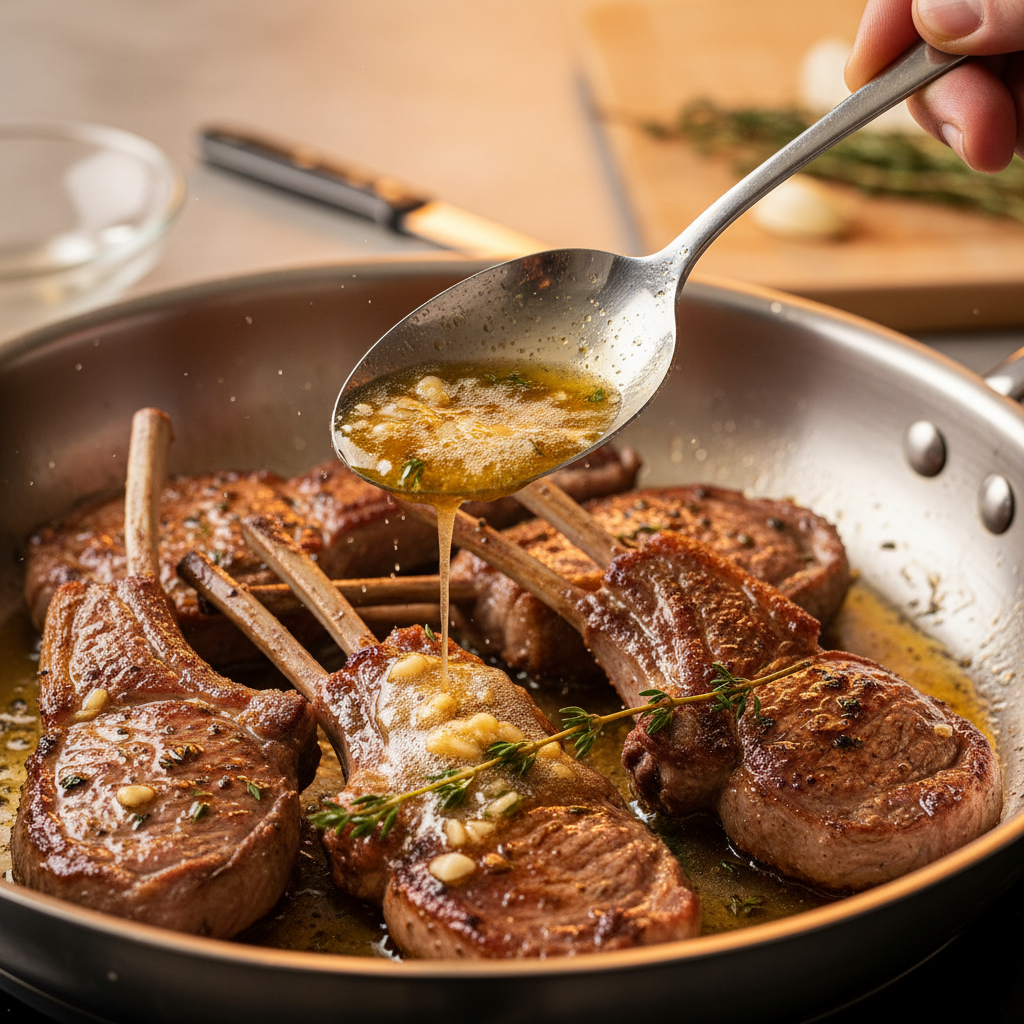
Practical tips for a better crust and louder garlic flavor
- Salt early when you can: even 30 minutes helps seasoning penetrate and dries the surface slightly.
- Don’t crowd the pan: if chops touch, they steam. Cook in batches and keep the first batch warm.
- Use smashed garlic for safety: smashed cloves perfume the butter and are less likely to burn than minced garlic.
- Add garlic after the first flip: you get a sear first, then the garlic infuses without turning bitter.
- Watch the butter: if it darkens quickly, reduce heat and keep basting, you want nutty brown, not scorched.
- Rest is non-negotiable: 5 minutes changes texture more than another minute in the pan.
Common mistakes (and quick fixes)
“My lamb chops pan fried turned out tough.”
Most often, they went past your preferred doneness, or they were shoulder chops. Next time, check internal temp earlier, and favor rib or loin chops for quick cooking.
“The garlic tasted bitter.”
That’s usually burnt garlic. Use smashed cloves, add them later, and lower heat when the butter goes in. If you love lots of garlic, finish with a little raw grated garlic stirred into melted butter off heat, the aroma stays fresh.
“No crust, just brown-ish.”
Dry the surface more aggressively, preheat longer, and resist moving the chops. If your pan is nonstick, browning can be weaker; cast iron or stainless tends to do better.
“The kitchen smoked up.”
Choose a higher-smoke-point oil and trim excess fat edges. You can also sear slightly lower and extend the time a bit, crust won’t be as intense, but it’s a fair trade in some kitchens.
When it’s worth asking a pro (or at least using extra caution)
If you’re cooking for someone pregnant, immunocompromised, or very young, it’s smart to follow more conservative doneness guidance and confirm temps carefully. If you’re unsure what “safe enough” means for your household, a licensed medical professional can help you weigh that decision.
Also, if your butcher cut chops from a different section than you expected, don’t be shy about asking how they recommend cooking them, they see these cuts all day and can often tell you whether pan-frying is a good match.
Conclusion: your next batch should taste like it came from a bistro
Good garlic lamb chops are mostly about control, dry surface, hot pan, garlic added at the right moment, and pulling by temperature instead of vibes. If you try one upgrade this week, use the thermometer and pull a little early, then let the rest do the work.
Make a small note after your first run, thickness, pull temp, and whether you wanted it a touch rarer or more done, and your second batch usually gets dramatically easier.
FAQ
How long do lamb chops take in a pan?
Many rib chops land around 7–10 minutes total, but thickness and pan heat change it. The clean way is to use time for the sear and temperature for the finish.
Should I marinate lamb chops before pan-frying?
You can, but heavy marinades often keep the surface wet and reduce browning. If you want big flavor without losing crust, try a dry rub, or marinate, then pat very dry before cooking.
What temperature should I cook lamb chops to?
Preference varies, and guidance differs by risk tolerance. According to USDA, whole cuts are typically recommended to reach 145°F with a rest; many cooks prefer lower for medium-rare texture, so decide intentionally and use a thermometer.
Can I use minced garlic instead of smashed cloves?
Yes, but minced garlic burns faster. If you use it, add it late, keep heat closer to medium, and baste quickly rather than letting it sit on the pan surface.
Why are my lamb chops pan fried but still pink near the bone?
Bone-in chops can show pink a bit longer near the bone because heat moves differently there. Temperature is more reliable than color, so check the thickest part of the meat without touching bone.
Do I need to bring lamb chops to room temperature first?
It helps cooking feel more even, but it’s not required. If they go in cold, expect a slightly longer finish time and keep an eye on the butter so it doesn’t burn while you chase the center temp.
What’s the best pan for searing lamb chops?
Cast iron and stainless usually give the best crust because they hold heat well. Nonstick can work, but you may get less browning and a softer exterior.
If you’re trying to get lamb on the table fast without losing that garlicky, browned finish, keep this method as your baseline, then adjust only one variable at a time, thickness, heat level, or pull temp, so you learn what your stove and pan like.