
Minestrone soup recipe searches usually come from the same place: you want something hearty and comforting, but you don’t want a fussy pot of soup that eats your whole evening.
This classic version keeps the spirit of minestrone, lots of vegetables, beans, pasta, an herby tomato broth, but trims the steps so it feels realistic for a weeknight. It also scales well, which matters if you’re cooking once and hoping for lunches.
I’ll walk you through what to buy, how to build flavor without overthinking it, and the small choices that make a big difference, like when to add pasta so it doesn’t turn to mush.
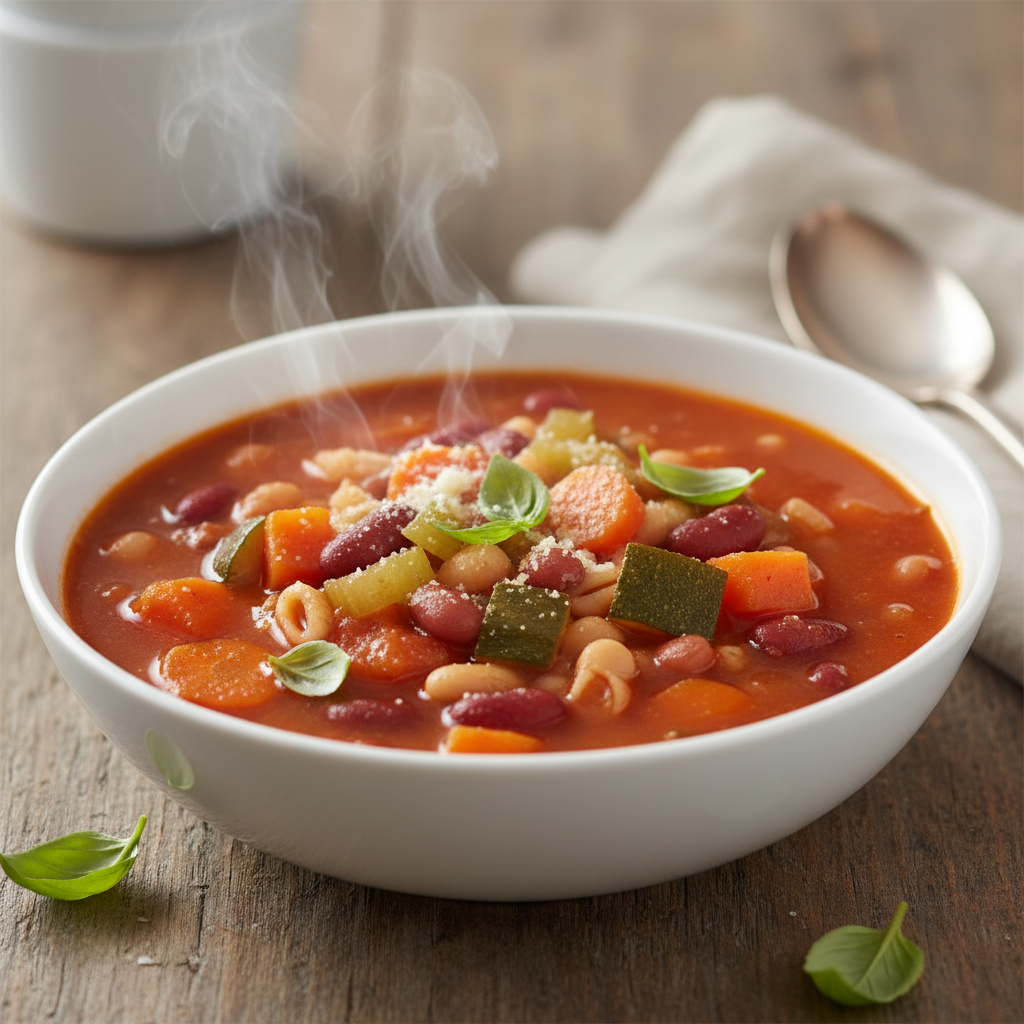
What “Classic” Minestrone Means (and What It Doesn’t)
Minestrone is more a format than a fixed formula. In many Italian-American kitchens, “classic” tends to mean a tomato-forward vegetable soup with beans and pasta, finished with Parmesan and herbs.
What it usually doesn’t mean: one “authentic” list you must follow. Seasonal swaps are normal, and your pantry often decides the final version. The goal is a balanced pot: savory base, tender vegetables, satisfying starch, and a broth that tastes like it had time.
According to USDA MyPlate, building meals around vegetables and beans is a practical way to add fiber and nutrients, though individual dietary needs vary and some people may need to adjust sodium or carbs.
Ingredients You’ll Need (Plus Smart Substitutions)
This minestrone soup recipe stays flexible. If you can’t find one vegetable, swap in a similar one and keep the ratios roughly the same.
Core ingredients
- Aromatics: onion, carrot, celery, garlic
- Vegetables: zucchini, green beans (fresh or frozen), leafy greens (kale or spinach)
- Tomato base: crushed tomatoes or diced tomatoes
- Broth: vegetable broth or chicken broth
- Beans: cannellini or kidney beans (canned is fine)
- Pasta: small shapes like ditalini, small shells, or elbow
- Flavor: bay leaf, Italian seasoning or oregano, black pepper
- Finish: Parmesan (or nutritional yeast), lemon, olive oil
Substitution table (quick decisions)
| Ingredient | Swap with | What changes |
|---|---|---|
| Zucchini | Yellow squash or extra green beans | Similar texture, slightly sweeter |
| Cannellini beans | Chickpeas or kidney beans | Chickpeas stay firmer, kidney beans feel heartier |
| Small pasta | Rice, quinoa, or gluten-free pasta | May need timing tweaks to avoid overcooking |
| Kale | Spinach or Swiss chard | Spinach wilts fast, chard has more bite |
| Parmesan rind | Extra Parmesan at the end | Less “slow-simmered” depth, still good |
How to Build Big Flavor Fast (This Is Where Most Soups Win or Lose)
People blame bland soup on “not enough seasoning,” but most of the time it’s timing. You want to create a savory base before the liquid goes in.
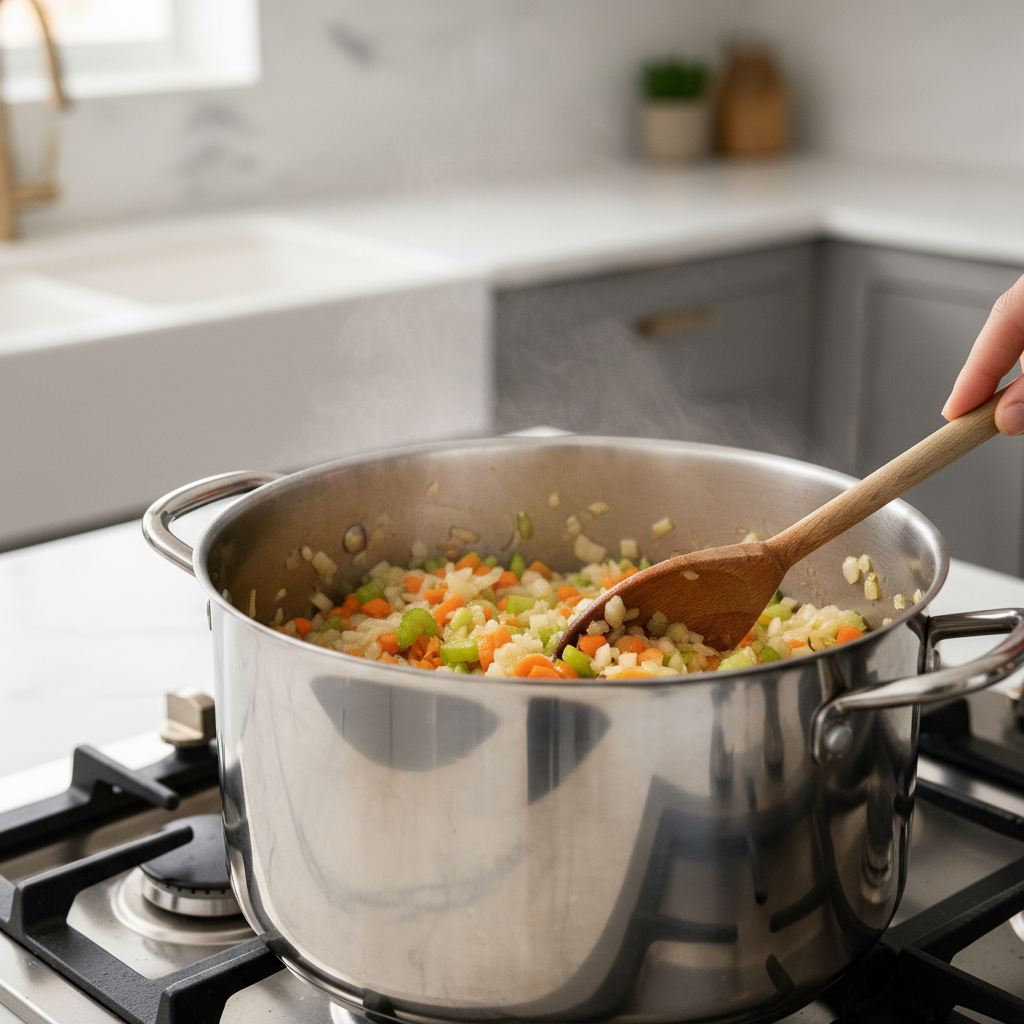
- Sweat the aromatics until the onion looks translucent and the carrot softens a bit. Rushing this step makes the pot taste flat.
- Toast the tomato paste for 30–60 seconds if you use it. It deepens the broth without needing hours.
- Add a Parmesan rind while simmering if you have one. It’s optional, but it gives that “restaurant” backbone.
- Finish with acid (lemon or a splash of vinegar). This is the quiet trick that makes vegetables taste more like themselves.
Classic Easy Minestrone Soup Recipe (Step-by-Step)
This is the practical, weeknight-friendly method. You can do it in one pot, and you can make it richer by letting it simmer longer, but you don’t have to.
Ingredients (about 6 servings)
- 2 tbsp olive oil
- 1 medium onion, diced
- 2 carrots, diced
- 2 celery stalks, diced
- 3–4 garlic cloves, minced
- 2 tbsp tomato paste (optional but helpful)
- 1 can (28 oz) crushed tomatoes or 2 cans (14.5 oz) diced tomatoes
- 6 cups broth (vegetable or chicken), more as needed
- 1 tsp Italian seasoning or 1/2 tsp oregano + 1/2 tsp basil
- 1 bay leaf
- 1 zucchini, diced
- 1 cup green beans (fresh or frozen)
- 2 cans beans (15 oz each), drained and rinsed
- 1 cup small pasta
- 2 cups kale or 3 cups spinach
- Salt and black pepper
- Parmesan, lemon, and/or a drizzle of olive oil to finish
Directions
- Heat olive oil in a large pot over medium heat, add onion, carrot, and celery, cook 6–8 minutes, stirring occasionally.
- Add garlic and cook 30 seconds, then stir in tomato paste if using and cook another 30–60 seconds.
- Add tomatoes, broth, Italian seasoning, and bay leaf, bring to a gentle simmer.
- Add zucchini and green beans, simmer 10–12 minutes until vegetables feel tender but not collapsed.
- Stir in beans, simmer 3–5 minutes.
- Add pasta and cook until just tender, typically 8–10 minutes, stirring so it doesn’t stick.
- Turn off heat, stir in kale (or spinach) until wilted, season with salt and pepper.
- Finish with Parmesan and a squeeze of lemon. Taste again and adjust.
Key point: if you expect leftovers, consider cooking pasta separately and adding it per bowl. That one choice keeps day-two soup from turning thick and starchy.
Quick Self-Check: What Kind of Minestrone Do You Actually Want Tonight?
This sounds silly, but it prevents the most common disappointment: making a light vegetable soup when you wanted a “bowl-as-a-meal” situation.
- Want it heartier? Add extra beans, or replace 1 cup broth with tomato sauce, keep pasta.
- Want it lighter? Use more greens, reduce pasta by half, finish with lemon and herbs.
- Need it pantry-only? Frozen mixed vegetables + canned beans + canned tomatoes works, just keep an eye on salt.
- Feeding picky eaters? Dice vegetables smaller and use a familiar pasta shape.
- Low-sodium goal? Choose no-salt-added tomatoes and low-sodium broth, then season at the end.
Make-Ahead, Storage, and Reheating (So It’s Good Tomorrow Too)
This minestrone soup recipe is one of those meals that often tastes even better after it sits, but only if you manage the starch.
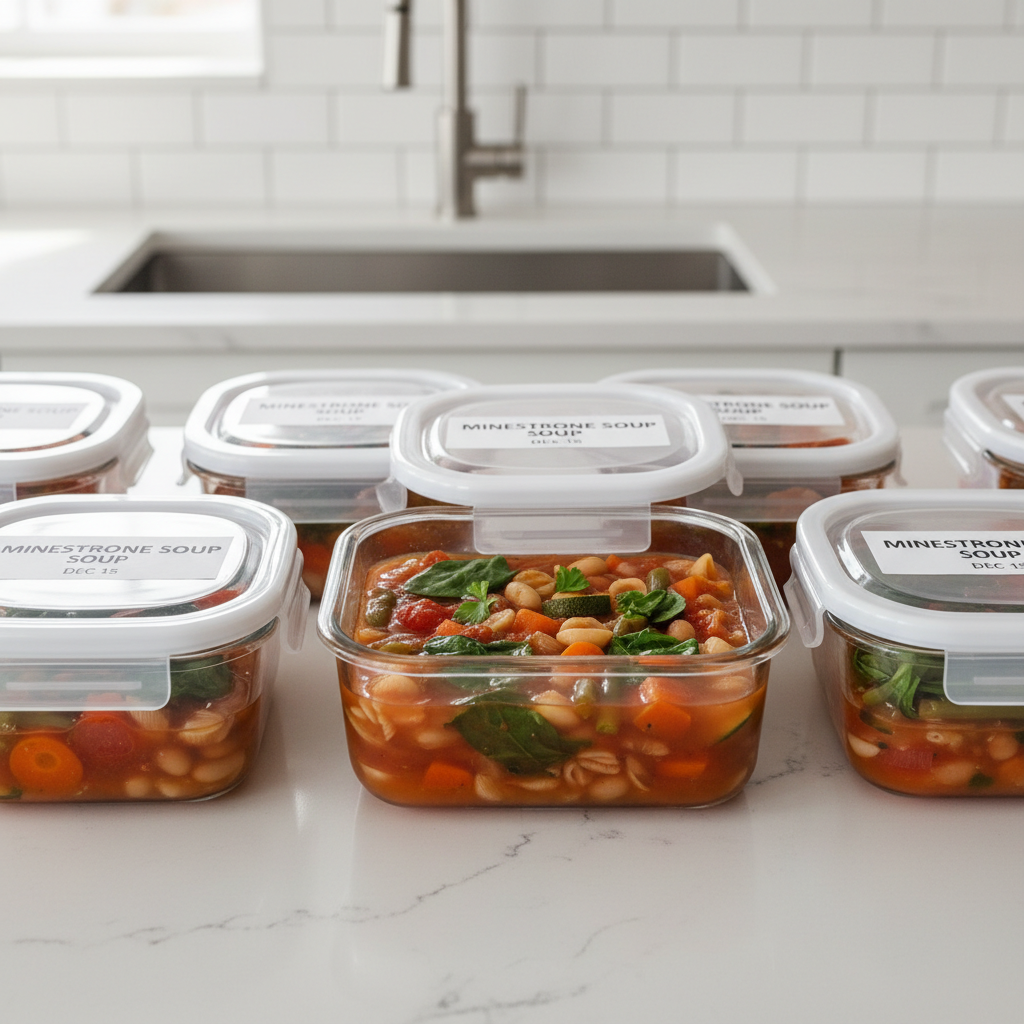
- Fridge: store 3–4 days in airtight containers. If pasta is in the pot, expect it to absorb broth.
- Freezer: freezes well for about 2–3 months, especially if you freeze it before adding pasta.
- Reheat: warm gently, add a splash of broth or water to loosen. Add fresh lemon at the end, not during reheating.
Food safety varies by situation, but if you’re uncertain about storage times, a local food safety resource or a healthcare professional can give guidance for higher-risk diets.
Common Mistakes (and Small Fixes That Actually Work)
If your pot tastes “fine” but not exciting, it’s rarely a lost cause. A few targeted tweaks usually get you there.
- Watery broth: simmer 10–15 minutes longer, or add a spoonful of tomato paste, then re-taste.
- Vegetables too soft: add quick-cooking veg (zucchini, greens) later, keep the simmer gentle.
- Too salty: add unsalted broth/water and more vegetables, finish with acid to rebalance.
- Pasta bloated: cook pasta separately next time, or undercook slightly if it will sit.
- Missing “something”: try lemon, Parmesan, or a drizzle of good olive oil before adding more salt.
Conclusion: A Classic Pot You Can Repeat Without Getting Bored
This minestrone soup recipe works because it’s structured but not rigid, you get a dependable, cozy soup while still being able to use what’s in your fridge.
If you want one simple action to take next time, focus on the base: give the onion, carrot, and celery a few extra minutes, then finish the bowl with lemon and Parmesan. That combo usually does more than doubling the spice rack.