
If you’re wondering how to make mac and cheese creamy, it usually comes down to two things: building a smooth sauce (not a clumpy one) and keeping heat gentle so the cheese melts instead of breaking.
A lot of home mac ends up grainy, oily, or oddly “tight” after a few minutes on the stove, and it’s frustrating because the fix often isn’t fancy, it’s just a couple small technique changes.
This guide walks you through a reliable creamy method, quick troubleshooting when the sauce goes wrong, and a few variations so you can match whatever’s in your fridge without guessing.
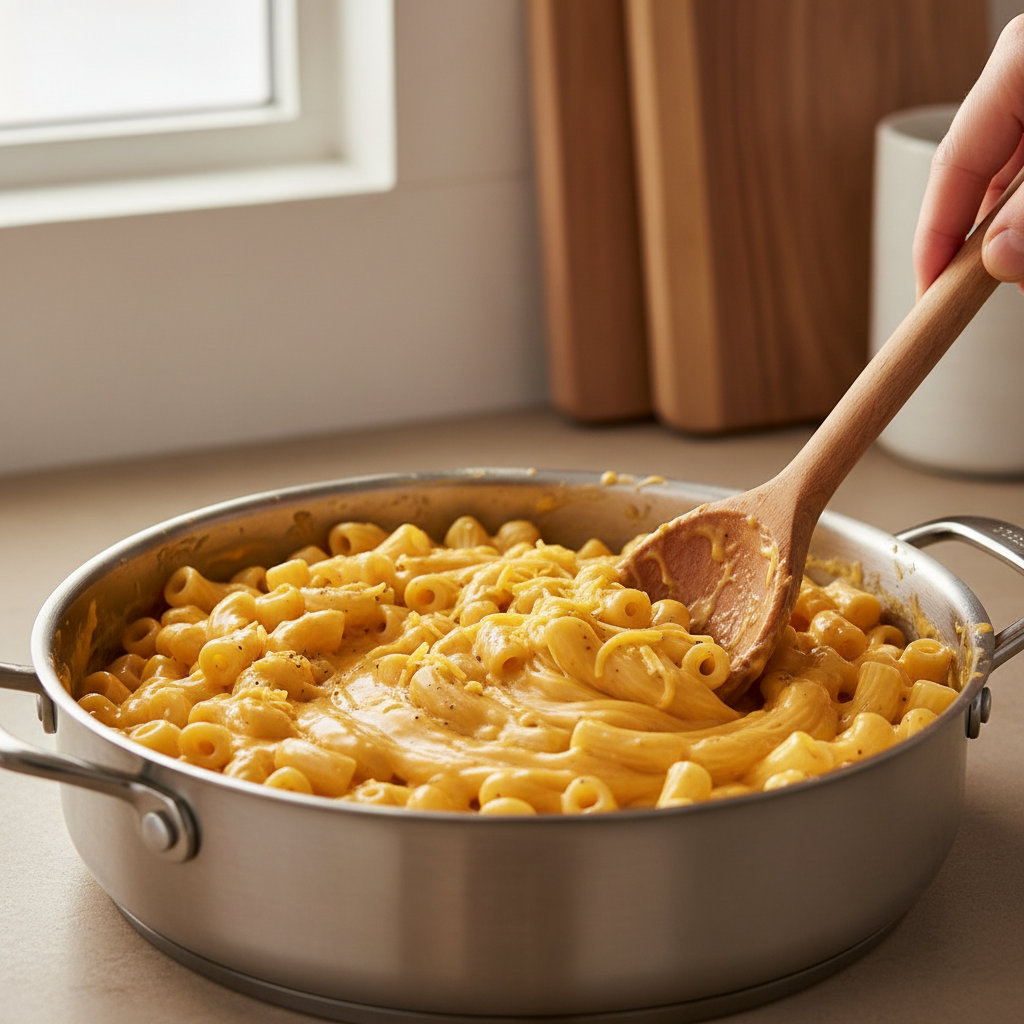
What “creamy” mac and cheese actually means
Creamy isn’t just “more cheese.” A creamy mac has a sauce that stays smooth, emulsified, and clingy, meaning fat and liquid stay combined so the pasta looks glossy, not separated.
The common enemy is high heat. When cheese gets too hot, proteins tighten and squeeze out fat, so you get a greasy surface and a sauce that feels gritty or broken.
- Creamy: sauce coats a spoon evenly, looks shiny, no oil pooling
- Grainy: tiny curds or sand-like texture on the tongue
- Broken: oil slick on top, sauce looks thin underneath
According to USDA Food Safety and Inspection Service (FSIS), hot foods should be kept at safe temperatures, so if you’re holding mac and cheese for serving, keep it warm without boiling, and cool leftovers promptly.
Why mac and cheese turns dry or grainy (real-world causes)
Most “not creamy” situations trace back to a short list of culprits, and you can usually spot which one hit you.
- Too much heat: cheese overheats, splits, and turns oily or gritty.
- Wrong cheese for melting: aged, very dry cheeses can taste great but melt less smoothly alone.
- Pre-shredded cheese: anti-caking powders often make sauces less silky.
- No starch help: sauce lacks structure, so it slides off pasta or tightens as it sits.
- Overbaked: oven time drives off moisture, especially in a shallow dish.
Also, pasta keeps absorbing liquid. Even perfect sauce can feel thicker after 5–10 minutes, which is why a small “re-loosen” step matters.
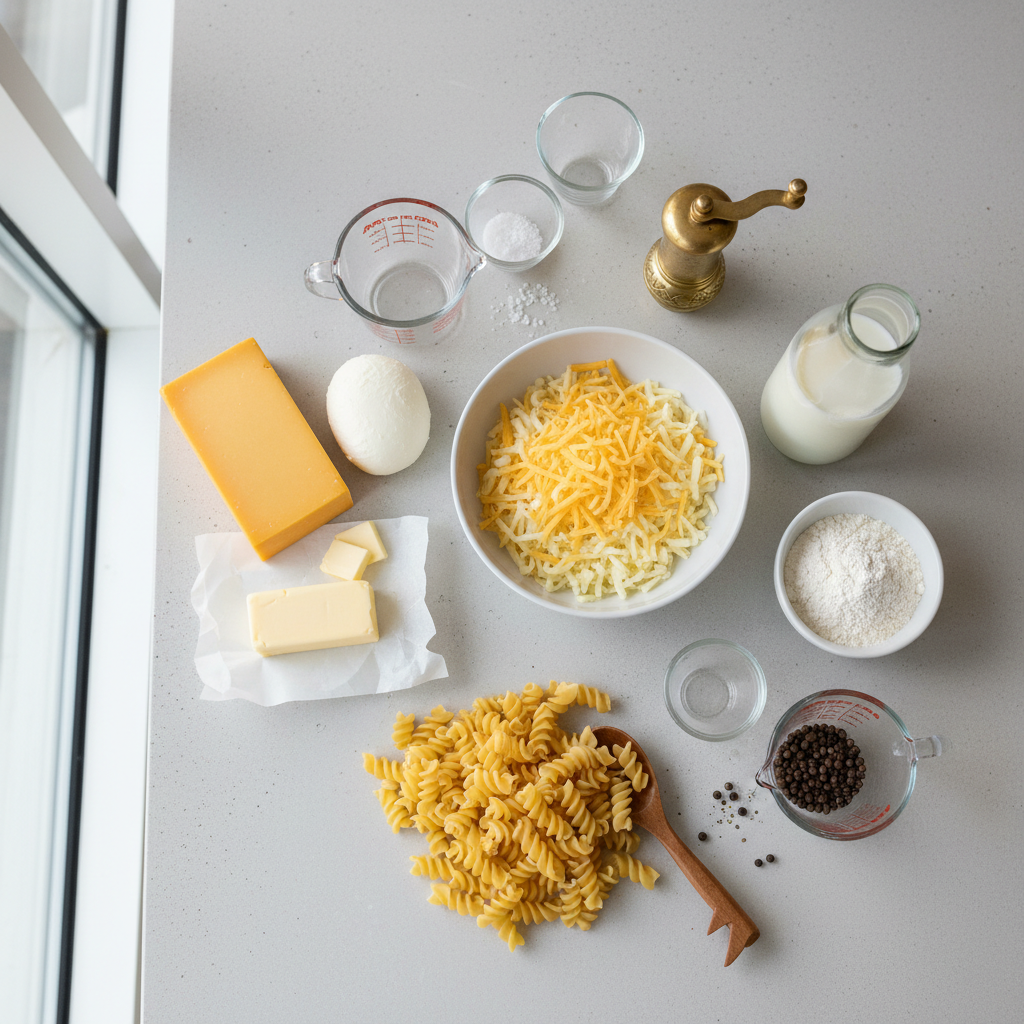
Ingredient choices that make it creamy (without overthinking it)
To nail how to make mac and cheese creamy, pick at least one cheese that melts smoothly, then add flavor cheeses as supporting players.
Best cheese mix (practical, not precious)
- Melty base: mild cheddar, Monterey Jack, mozzarella, or American cheese (a small amount helps emulsify).
- Flavor boost: sharp cheddar, Gruyère, smoked gouda, Parmesan (use modestly to avoid graininess).
If you want a strong cheddar hit, keep some sharp cheddar, but let a smoother cheese carry the texture.
Milk, cream, or evaporated milk?
- Whole milk: reliable, neutral, easy.
- Evaporated milk: often gives extra silkiness because it behaves well in cheese sauces.
- Heavy cream: richer, but can feel heavy and still split if overheated.
One more detail people skip: shred your own cheese when you can. It’s not culinary snobbery, it just melts better in many cases.
The creamy stovetop method (step-by-step, hard to mess up)
This is the simplest path to creamy texture because you control heat and moisture the whole time.
What you’ll need (about 4 servings)
- 8 oz elbow macaroni (or shells/cavatappi)
- 2 tbsp butter
- 2 tbsp flour
- 2 cups whole milk (warm helps)
- 2 to 2 1/2 cups shredded cheese blend
- Salt, pepper
- Optional: 1 tsp Dijon mustard or a pinch of garlic powder
Steps
- Cook pasta just shy of done, then drain. Reserve 1/2 cup pasta water.
- In the same pot, melt butter on medium-low, stir in flour, cook 60–90 seconds until it smells lightly nutty (no browning needed).
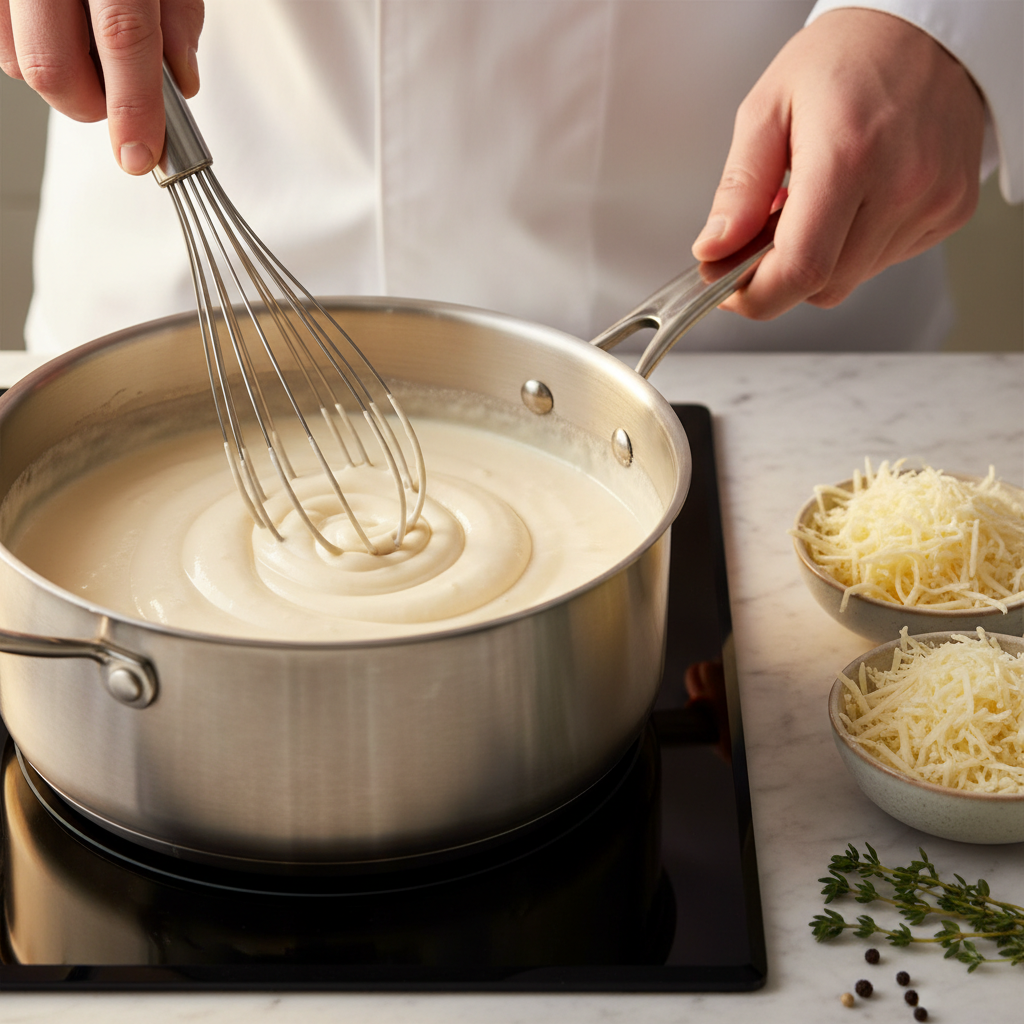
- Slowly whisk in milk, keep whisking until smooth, then simmer gently until it lightly thickens.
- Turn heat to low. Add cheese in handfuls, stirring until each addition melts before the next.
- Add pasta, stir to coat. If it looks too thick, splash in pasta water or a little warm milk.
- Season. Taste first, then add salt; cheese can be salty already.
The quiet trick: when the sauce looks perfect, stop cooking it. Sitting on heat “just a bit longer” is where a lot of grainy sauces start.
Quick self-check: which problem do you have?
Before you start changing ingredients, figure out what you’re seeing. It saves time and groceries.
- Sauce looks oily on top: heat likely too high, or cheese went in too fast.
- Sauce feels gritty: aged cheese heavy mix, pre-shredded cheese, or overheating.
- Mac feels dry after a few minutes: pasta absorbed liquid, sauce needed loosening.
- Sauce is thin and watery: roux not cooked long enough to thicken, or not enough cheese/starch.
- Sauce is gluey: too much flour, or reduced too far before adding cheese.
Fixes that work fast (even if your sauce is already struggling)
If you’re mid-cook and things look off, don’t panic. Most creamy texture issues are reversible if you act early.
If it’s grainy
- Pull the pot off the burner, let it cool 1–2 minutes.
- Stir in a splash of warm milk and whisk gently.
- If you have it, add a small amount of American cheese or a spoon of cream cheese to help smooth things out.
If it’s oily or broken
- Lower heat immediately.
- Whisk in a tablespoon or two of warm milk, a little at a time.
- In stubborn cases, a tiny pinch of cornstarch slurry can help re-bind, but add carefully to avoid pasty texture.
If it’s too thick or “tight”
- Add reserved pasta water in small splashes and stir well.
- Warm milk also works, but pasta water helps because the starch improves cling.
This is where people really learn how to make mac and cheese creamy: you’re not chasing a final thickness in the pot, you’re building a sauce that can handle a few minutes of resting.
Baked mac that stays creamy (not dry)
If you love the crusty top, you can bake it without sacrificing the inside. The key is baking less and saucing more.
- Undercook pasta by 1–2 minutes so it doesn’t drink up all the sauce in the oven.
- Make the sauce slightly looser than stovetop serving consistency.
- Bake at 350°F just until bubbling at the edges, usually 15–20 minutes, then broil briefly for color.
- Rest 5–10 minutes before serving so it sets without drying.
For toppings, buttered panko adds crunch without pulling moisture from the sauce as aggressively as a thick breadcrumb layer can.
Cheese-sauce options at a glance (choose your style)
There’s more than one “right” path. This table helps you pick based on how you cook and what texture you want.
| Method | Why it stays creamy | Best for | Watch out for |
|---|---|---|---|
| Roux + milk (classic) | Flour thickens, helps stabilize sauce | Stovetop or baked | Too much flour can taste pasty |
| Evaporated milk method | Often emulsifies smoothly with cheese | Fast weeknight mac | Still can split if boiled hard |
| American cheese “assist” | Melts very smoothly, helps bind fats | Ultra-silky texture | Too much can mute sharp-cheese flavor |
Key takeaways (save these for next time)
- Low heat wins. Cheese melts, it doesn’t need to boil.
- Use a melty base cheese, then layer in stronger cheeses for flavor.
- Hold back liquid on purpose: reserve pasta water and adjust at the end.
- Shred your own cheese when possible for smoother sauce.
If you want one simple rule to remember, it’s this: when the sauce looks done, stop cooking and start serving.
Conclusion: a creamy mac you can repeat
Learning how to make mac and cheese creamy isn’t about adding more ingredients, it’s about controlling heat and building a sauce that stays stable when the pasta goes in. Keep the burner low, choose at least one good melter, and finish with small liquid adjustments until it looks glossy.
Next time you cook it, try just one upgrade: shred cheese fresh and add it off-heat. That single change fixes a surprising number of “why is this gritty?” nights.
If this helped, share it with the person in your life who always “cranks the heat to make it faster,” they might not love hearing it, but their mac will.