
Mooncake recipes often look deceptively simple, then you try them once and end up with cracked tops, oily fillings, or a texture that feels more like a cookie than a tender cake. The good news is most “failures” come from a few predictable spots: dough hydration, filling prep, and how you handle the mold.
If you want traditional results at home in the U.S., it helps to know what “traditional” actually means in mooncake terms, because Cantonese-style baked mooncakes behave differently than Suzhou-style flaky mooncakes. This guide focuses on classic baked mooncakes with a smooth, thin skin and rich fillings, plus notes on common variations you’ll see in Chinese bakeries.
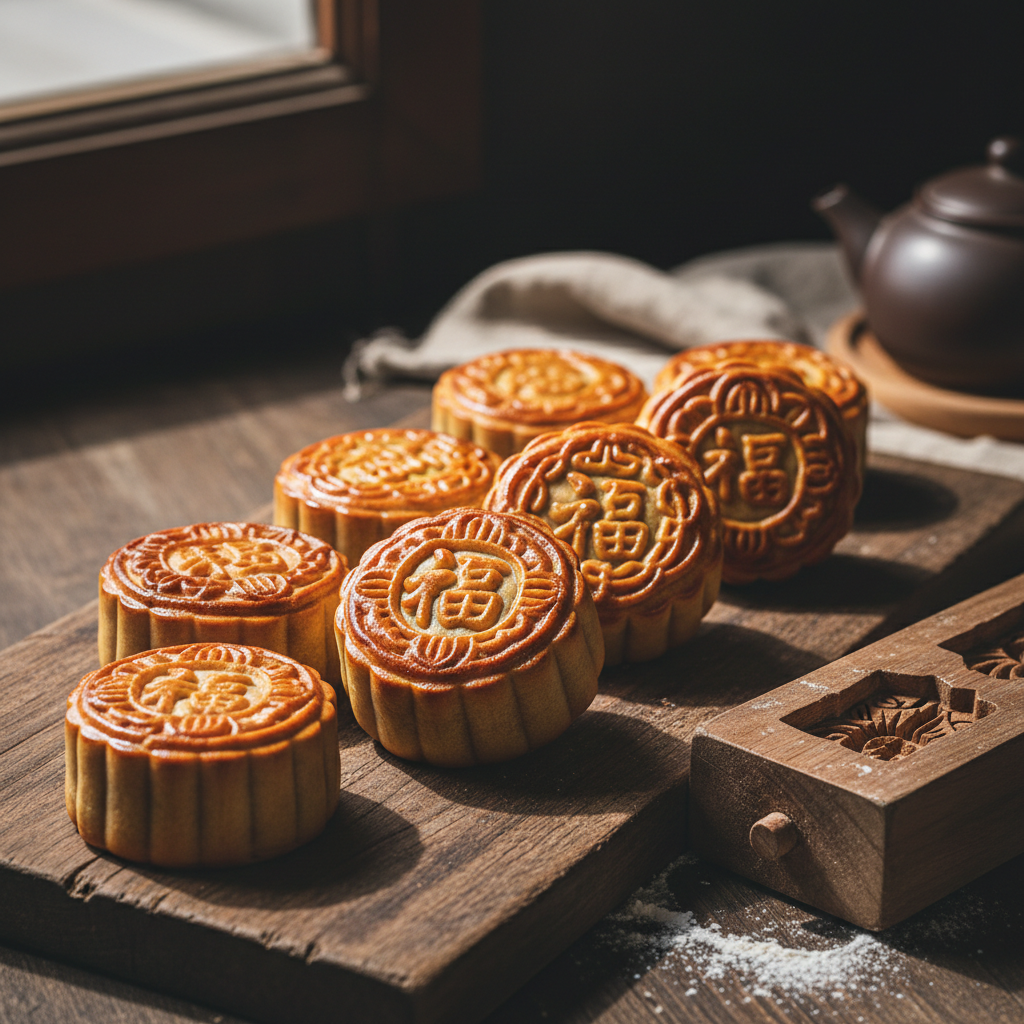
One quick expectation reset: the “skin” on baked mooncakes is thin, lightly sweet, and designed to highlight the filling. If you go in expecting a fluffy cake crumb, you’ll keep overmixing or overbaking while chasing the wrong texture.
Key takeaway: a great mooncake is mostly about consistency and restraint, measured portions, gentle handling, and enough resting time so the dough stops fighting you.
What makes a mooncake “traditional” (and which style you’re baking)
In American kitchens, “traditional mooncake” usually points to Cantonese-style baked mooncakes, the glossy ones with stamped patterns. They use an oil-based syrup dough, filled with dense pastes (lotus seed, red bean), sometimes with salted egg yolk.
- Cantonese baked: thin tender skin, shiny finish, molded patterns, baked in two stages.
- Suzhou-style: flaky layers, shorter shelf life, closer to a pastry, usually savory or sweet.
- Teochew-style: often flaky too, sometimes uses lard, with mung bean-based fillings.
This article sticks with Cantonese baked mooncakes because they’re the most common “recipe” people search for and the easiest to scale at home once you understand the method.
Ingredients that matter more than people admit
Mooncakes don’t need a long shopping list, but a few ingredients are doing heavy lifting. Substitutions can work, but they change color, softness, and how cleanly the pattern releases.
Core dough components
- Golden syrup: gives sweetness, color, and moisture retention. Many home bakers use homemade invert syrup; store-bought golden syrup can also work, though browning may vary.
- Alkaline water (lye water): helps deepen color and improves tenderness. Use sparingly; too much can taste soapy.
- Neutral oil: peanut oil is traditional; canola or grapeseed is common in the U.S.
- All-purpose flour: keeps the skin tender; higher-protein flour can make it tougher.
Classic fillings
- Lotus seed paste: iconic, smooth, rich; easiest path is buying a quality paste if you’re short on time.
- Red bean paste: slightly lighter, still traditional, often easier to find.
- Five-kernel/nut: delicious but trickier because chunky fillings can tear the skin during molding.
- Salted egg yolk: adds a savory fatty center; handle carefully for food safety and odor control.
According to USDA Food Safety and Inspection Service (USDA FSIS), eggs should be handled with care to reduce foodborne illness risk. If you’re using raw salted yolks, keep them refrigerated, work quickly, and bake thoroughly; when in doubt, consider pre-cooked salted yolks from reputable suppliers or consult a food safety professional for your setup.
A practical ratio chart (so you can scale to your mold)
Most home mooncake problems are portion problems. If the dough is too thick, patterns look shallow and the bite feels bready. If it’s too thin, you get blowouts and leaks.
| Mooncake size | Total weight | Filling weight | Skin (dough) weight | Common ratio |
|---|---|---|---|---|
| Small | 50 g | 35–40 g | 10–15 g | 80/20 or 75/25 |
| Standard | 75 g | 55–60 g | 15–20 g | 80/20 |
| Large | 100 g | 75–80 g | 20–25 g | 80/20 |
If you’re new, start with 75 g mooncakes at an 80/20 ratio. You get enough dough to cover cleanly without losing the “thin skin” character.
Traditional baked mooncake recipe (step-by-step, home-kitchen friendly)
This method aims for the classic glossy top and a skin that softens after resting. Don’t judge the final texture on bake day, mooncakes typically “mature” over 1–3 days as oil redistributes and the skin relaxes.
Ingredients (about 10 mooncakes at 75 g each)
- Filling (lotus or red bean): 550–600 g total, portioned
- Optional salted egg yolks: 10
- Golden syrup: 200 g
- Neutral oil: 70 g
- Alkaline water: 4 g
- All-purpose flour: 280 g (start with 260 g, adjust)
- Egg wash: 1 egg yolk + 1–2 tsp water (or milk)
1) Make and rest the dough
Whisk golden syrup, oil, and alkaline water until smooth. Add flour and fold just until no dry spots remain. The dough should feel soft, slightly tacky, and pliable, not wet.
- Cover and rest 45–90 minutes at room temp.
- If it feels too sticky after resting, dust in a small amount of flour, a teaspoon at a time.
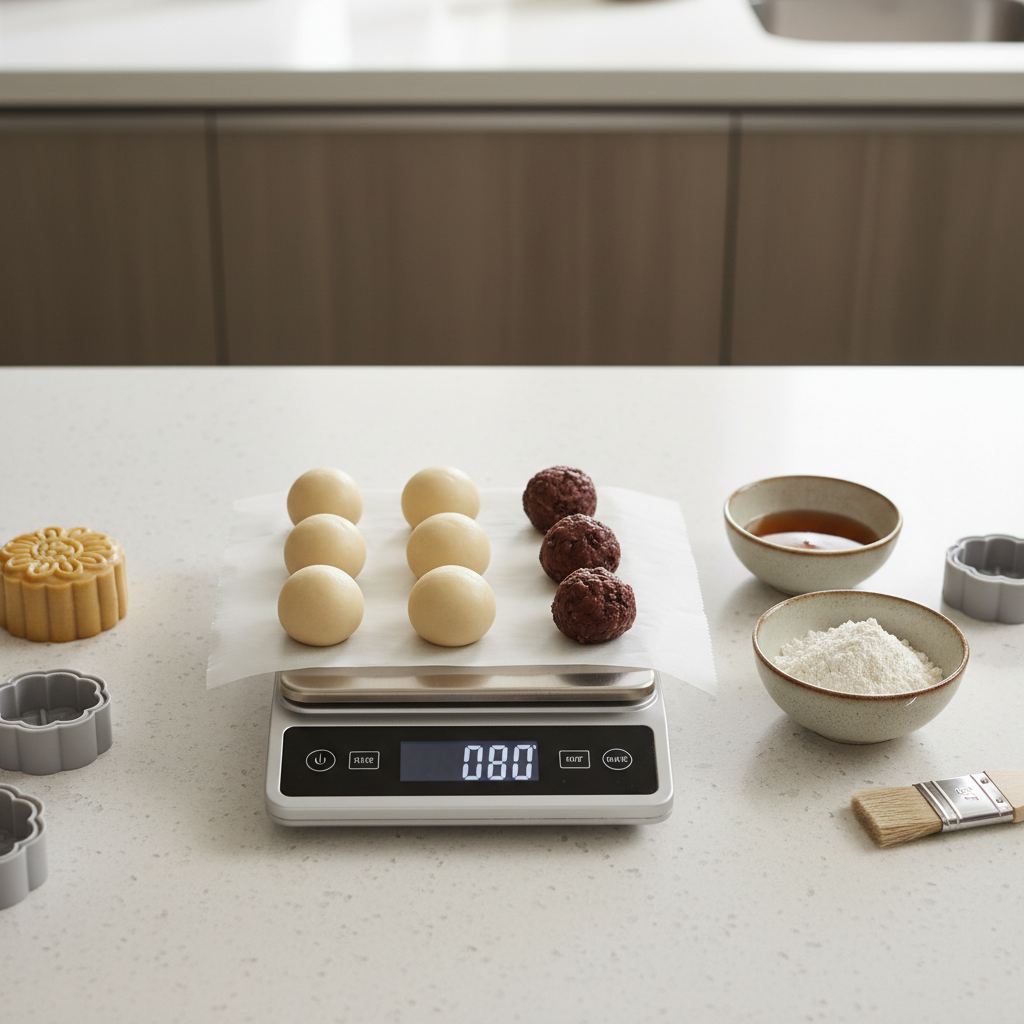
2) Prep filling portions
Portion filling into balls based on your mold size. If using salted egg yolks, wrap each yolk inside the filling portion so it sits centered.
- If filling sticks, lightly oil your gloves or hands.
- For chunky nut fillings, compress firmly so air pockets don’t cause cracks.
3) Wrap, then mold
Flatten a dough portion into a disk, wrap around the filling, pinch closed, and roll gently into a smooth ball. Keep pressure light; tearing usually starts from over-stretching one spot.
- Lightly dust the outside with flour, then brush off excess.
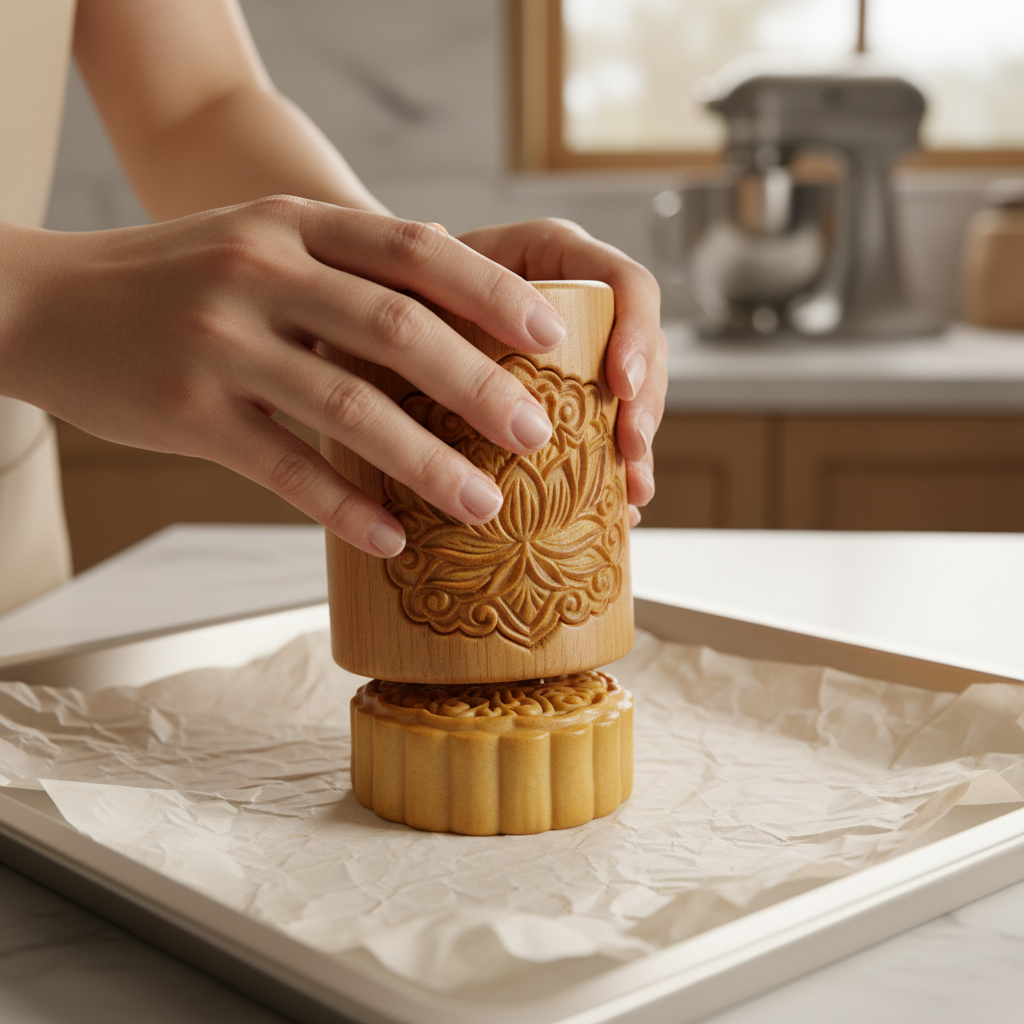
- Press into the mold, release onto a parchment-lined tray.
4) Bake in two stages for clean color
Bake at 350°F for 5–7 minutes to set the pattern. Cool 10–15 minutes, then brush a thin egg wash layer. Return to bake 8–12 minutes until golden.
- Too much egg wash floods details and causes uneven browning.
- If tops crack early, your oven may run hot, lower 15–25°F next batch.
5) Rest for “maturation”
Store in an airtight container at room temperature 1–3 days. The skin typically darkens slightly and turns softer, which is the texture most people recognize as “bakery-style.”
Quick self-check: why your mooncakes crack, leak, or won’t release
Before you tweak the whole recipe, diagnose the symptom. Most fixes are small and specific.
- Cracked top: dough too dry, oven too hot, or not enough rest time before molding.
- Leaking filling: skin too thin for a chunky filling, seams not fully sealed, or filling too oily/warm.
- Pattern looks blurry: too much flour dusting, too heavy egg wash, or overbaked first stage.
- Sticking in the mold: insufficient dusting, dough too warm/tacky, or mold corners not cleaned.
- Tough skin: too much flour, overmixing, or skipping maturation time.
One overlooked detail: if you’re in a very dry climate or your flour is extra absorbent, hydration can swing more than you expect. Adjusting flour by 10–20 g often matters more than changing everything else.
Practical tips for U.S. kitchens (ingredients, tools, timing)
Traditional technique still applies, but sourcing and equipment in the U.S. can shift outcomes.
Tools that genuinely help
- Digital scale: portion accuracy makes molding calmer.
- Mooncake press mold: plastic presses are easy for beginners; wooden molds look great but need more flouring skill.
- Small soft brush: for controlled egg wash, you want a thin film, not a coat.
Ingredient sourcing notes
- Golden syrup: international aisles, British sections, or online.
- Lotus paste: Asian grocery stores, often canned or vacuum-packed.
- Alkaline water: Chinese markets; measure carefully, it’s powerful.
Make-ahead timeline
- Day 0: cook or buy filling, portion and chill.
- Day 1: make dough, assemble, bake.
- Day 2–3: flavor and texture settle; serve or gift.
Common mistakes (that waste time) and how to avoid them
Some “fixes” sound logical but backfire with baked mooncakes.
- Adding lots of flour to stop sticking: it dries the dough and makes the skin thick, use light dusting and brush off excess.
- Skipping the first bake stage: patterns can collapse and egg wash can slide, the set-then-wash approach tends to look cleaner.
- Judging texture the same day: fresh mooncakes can feel firm, maturation usually changes the bite.
- Overfilling because it tastes good: a small ratio change can cause blowouts, stay close to your mold’s target weight.
If your goal is picture-perfect patterns, keep a “practice batch” mindset for your first run. Even experienced bakers adjust based on mold depth and oven quirks.
Conclusion: a simple plan for better traditional mooncakes
Good mooncake recipes reward small, boring discipline: weigh portions, rest the dough, seal seams, and bake in stages. Once those habits lock in, you can swap fillings, add yolks, or try different molds without the usual drama.
If you want a clean next step, pick one classic filling, use a 75 g mold, and run a small batch of 6–8. Take notes on dough feel and bake color, then adjust one variable at a time.
FAQ
What are the most traditional mooncake fillings?
Lotus seed paste and red bean paste are the classics for Cantonese-style baked mooncakes. Salted egg yolk is also traditional, especially for richer “double yolk” versions, but it adds handling steps.
Why do my mooncakes crack even when I follow the recipe?
Cracking often points to dough dryness or oven heat. Try a longer dough rest, a small flour reduction, or a slightly lower temperature, and avoid heavy egg wash early in the bake.
Can I use honey instead of golden syrup?
Honey can work in a pinch, but it usually changes browning and aroma, and the skin may behave differently. If you substitute, expect to tweak flour and bake time rather than assuming a 1:1 swap.
How long should mooncakes rest before eating?
Many baked mooncakes taste and feel more “right” after 1–3 days in an airtight container. The skin softens and the color deepens slightly as moisture and oil redistribute.
Why won’t my mooncakes release cleanly from the mold?
Too little dusting, sticky warm dough, or flour left inside the mold grooves are common causes. Lightly flour the dough ball, tap out extra, and keep the mold clean between presses.
Are mooncakes supposed to be very sweet?
Traditional ones can be sweet and rich, but sweetness varies by filling and brand. If you’re making your own filling, you can often reduce sugar gradually, though it may affect texture and shelf life.
How do I store homemade mooncakes safely?
For plain sweet fillings, many people store baked mooncakes airtight at room temperature for a short period, but conditions vary by kitchen. If you use egg yolks or perishable add-ins, refrigeration is often the safer choice; when unsure, follow conservative food safety practices and consult a professional.
What’s the best mold size for beginners?
A 75 g press mold is a comfortable starting point because the dough-to-filling balance is forgiving and the pattern tends to show well without extreme thin-skin handling.
If you’re trying mooncake recipes mainly for a holiday gift box or a Mid-Autumn dinner, it can help to decide early whether you want “as traditional as possible” or “traditional look, simpler workflow,” because that choice affects fillings, yolk use, and how much time you’ll spend practicing the mold step.